Showing posts with label readingtheworld. Show all posts

Tuesday, July 29, 2014

reading: Women Who Destroy Science Fiction & Literary Translations


reading this week: stories written by women who destroy science fiction, and literary translations

Science Fiction and the world
Last week, I started to read a short story anthology - it inlcudes more than 20 stories, and several essays - several of the stories deal with war, and new types of soldiers. In one story, the main character can pick up emotions and the hunch of thoughts - and is brought into regions of conflict, to find terrorists. Only that being more sensitive makes you also more human... In another story, the world is dealing with rising sea levels, and with genetic experiments to create “aquatic”-soldiers.. – people who are half human, half water-being. It made me think of the line that science fiction often isn't about the future, but about we deal with this ourselves as a society, and with this world.
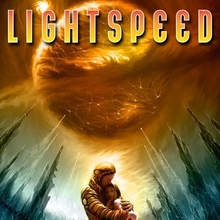

Which is a question that created the collection...  published by Lightspeed Magazine, this is an all-women-author scifi and fantasy collection, inspired by a troubling aspect of the scifi writing / reader scene: that there are readers, fellow authors and editors who think women don’t belong to the sci-fi scene, that women and the “softer” themes they write about “destroy” sci-fiction. No matter that the classic first sci-fi novel was Frankenstein, which happened to be written by a woman: Mary Shelley. But maybe it would be too idealistic to expect a literary genre to be ahead of its time just because it is future oriented by definition.

This anthology was created through a Kickstarter campaign, and the ironic name of the campaign then turned into its title: “Women Destroy Science Fiction”. Every time I read the title, I have to smile: it’s so good that they didn’t move the odd believe that inspired the book into the editorial, but in an almost punk-way put it right on the cover. Or like one of the editors put it: "We took the rage and hurt and created something beautiful". The issue has both a print and an online part, here are some links:
*

Literary Translations: Asymptote

Asymptote is an international journal dedicated to literary translation, with editors who are interested in "encounters between languages and the consequences of these encounters. Though a translation may never fully replicate the original in effect (thus our name, “asymptote”), it is in itself an act of creation."

There was a great piece on translation in the previous issue: "The Space Between Languages" by Herta Müller.

Browsing the recent issues was indeed rather international - so many places, so many stories! Here are some links:

Cuba
 Cubanology by Omar Pérez
"Walking through the streets of Cerro, Santos Suarez, Centro Habana, Las Cañas, you notice the presence of the numbers game, called charada or bolita. Kábala, tómbola, tíbiri tábara. Pythagoras said, life is number. Thursday I go out walking, but only after offering my salutations in the false-gothic church on Reina Street to Jesus and his father Joseph: I ask of the gods that they permit me to ask nothing of them..."

Argentine
"Until a Hurricane Sweeps Through" by Margarita García Robayo
"My first flight was to Miami. It was the busiest international route in the city, and also the most sought after: I competed and I won..."

Colombia
The Ears of the Wolf by Antonio Ungar
"My sister is alone on this side of the fence, standing on the red earth, under the noonday light. I am looking at her from next to the columns on the porch. She has done something forbidden and without hesitating for a second she has walked right up to the fence..."

Finland
"Farthest from Death" by Elina Hivronen

"I want to get out of this space. The engineer with the slicked-back hair sitting next to me has passed out on my shoulder..."

Madagascar
"Childhood in Madagascar" Christian Dumoux
"It was in Antsaralalana, which meant beautiful road. It was left of the station, with a restaurant, "The Lyonnais," at the end of the street. The house had the peculiarity of being partially collapsed and having three floors: they lived on the third floor..."

**

Links + More

Reading the world:  the collected list of stories is online here: global reading, and a note on the reading journey can be found here:  reading the (missing parts of) the world 


Monday, July 21, 2014

reading: hugo award stories + between borders + Nadine Gordimer


Reading this week: the Hugo Award stories 2014, and stories from between borders - and short stories by Nadine Gordimer: 

Hugo Awards 2014
The Hugo Awards are a set of awards given annually for the best science fiction or fantasy works and achievements of the previous year, and have a long tradition, reaching back to 1953. I read the nominated short stories - and it turned out, they are rather international this year, with stories and authors from Asia, Africa, Europe and America. And their themes: no space ships there, no aliens, but reflections on life and the universe, in form of the unusual mind games of speculative fiction: what if there was a tiny rain falling every time someone lie? Where do wishes go? What if you were a dinosaur?

Somalia, US
"Selkie Stories Are for Losers by Sofia Samatar
"You're not going to Egypt," I tell Mona. "We're going to Colorado. Remember?" - That's our big dream, to go to Colorado..."

China
The Water That Falls on You from Nowhere”, John Chu
The water that falls on you from nowhere when you lie is perfectly ordinary, but perfectly pure. True fact. I tested it myself when the water started falling a few weeks ago. Everyone on Earth did...

US
If You Were a Dinosaur, My Love by Rachel Swirsky
"If we lived in a world of magic where anything was possible, then you would be a dinosaur, my love. You’d be a creature of courage and strength but also gentleness. Your claws and fangs would intimidate your foes effortlessly. Whereas you—fragile, lovely, human you—must rely on wits and charm..."

quick detour into the past:  
The fourth nominated story was a real suprise: it is from a Dutch author (which is a Hugo Award first time). The story isn't set in Europe or in space, though... but in a place I've visited years ago. Such a beautiful way of arriving there again, in Chiang Mai, Thailand. Here's a photo from my own trip, and below the story link: 


Netherlands / Thailand
The Ink Readers of Doi Saket by Thomas Olde Heuvelt
"By now the surface of the river was teeming with krathongs. Like any other boy in Doi Saket, Tangmoo had been told the tragicomic story of Loi Krathong’s origins countless times, and so he was aware of the invaluable influence of the village he called home. Seven hundred years ago Neng Tanapong, daughter of a Brahman priest in the kingdom of Sukhothai, had been playing on the riverbank..." “

And 2 more sci-fi stories, recent reads, and both coming with spaceships - but the stories themselves are of a different kind:

Japan
"Mono no aware" by Ken Liu (Hugo Award Winner 2013)
"The world is shaped like the kanji for umbrella, only written so poorly, like my handwriting, that all the parts are out of proportion.."

Vietnam/France
"The Waiting Stars" by Aliette de Bodard (Nebula Award 2013)
"There were tales, at the Institution, of what they were. She’d been taken as a child, like all her schoolmates–saved from the squalor and danger among the savages and brought forward into the light of civilisation..." 

*

Somewhere Between Borders
It's exciting where this short story summer challenge is taking me, or rather: how it shifts the focus and leads to other places, and makes me more attentive to possible international short stories. When I browsed the current stories and essays on the homepage of London-based magazine Litro, I arrived at a story from Africa - and it turned out, it was more than a story. Here's the link and a quote:


"Somewhere between the borders: Night-Train to Kalaki"  by Tara Isabelle Burton (Uganda)
"I told him about the old Black Sea Express train that went east from Constantinople to Kalaki...."

More borders
Reading the story, I noticed that the first part of the title also is a blog tag: "Somewhere between the borders" ... and when I clicked it, I arrived at a series of stories from other places. Here are some direct links:

"Supersonic Bus" by Jowhor Ile (Nigeria)
"You are travelling from Port Harcourt to Yenagoa. Everybody knows the best place to board a cheap bus is at Mile One Bus Park, right under the bridge.  A man is ringing a bell and shouting, “Yenagoa, five hundred naira! Three per seat, five hundred naira.”

"'Til God" (Cyprus) by Polis Loizou
"On the other side of the window, the tips of the cypress trees met five metres above the road, vehicles running between them like children at the feet of kissing relatives. Only fifteen minutes ‘til God from here. The Holy House would sort him out."

"Crying Poverty in Guatemala Airport" by David Hutt
"I waited for my plane back to Britain in the Guatemala City airport I felt the satisfaction and aches of a man who knows he has done a job well. One twenty quetzales note sat in my pocket, kept as a souvenir..."

And an extra link from the current Litro features: a visit to a German town that once was utopia, and a reflection on Berlin... which again brought back memories of an own trip... and a visit of photo files:


"Futures Past" by E.E. Mason
"I walked around and looked and fell in love with this scuffed and battered city. Sleazy, insouciant, grouchy, bleak. Blunt, cheap, edgy. Ah, what great days. I thought I would stay forever..."

**

Nadine Gordimer
And in honour of Nadine Gordimer and her life work, I read some of her stories - Open Culture has a feature up with links, one of the stories is an audio with Gordimer reading: 5 Free Short Stories by Nadine Gordimer. And Granta Magazine has a special feature, too: In memory of Nadine Gordimer

Here's a direct link:
"The Ultimate Safari" by Nadine Gordimer

And a second one, following the city theme that is running through the current short stories. Especially the night train to Kalaki made me think of the book "Invisible Cities" by Italo Calvinowhich includes 55 portraits of imaginary cities, and each city reads like a zen riddle that hints at society, architecture, the shapes we form to live in. So here the final link, a story I have to read yet:
City of the Dead, City of the Living
"The street delves down between two rows of houses like the abandoned bed of a river that has changed course...."

**

Links & More

Reading the world:  a note on the reading journey can be found here:  reading the (missing parts of) the world 


Monday, July 14, 2014

Reading (+crowdfunding) a global walk through time & stories of migration


Reading this week: trail notes from one of the longest walks through the world and modern stories of migration: 

Since April, I am reading the trek notes of a global walk: Paul Salopek, a journalist who won the Pulitzer, is walking the world, following the trail of humans from the origins in Africa along the directions they walked to migrate and spread. The name of his project is “Out of Eden Walk”, it’s supported by National Geographic.

The walk will be 7 years long, leading through 4 continents. Salopek started walking a year ago, in Ethopia. From there, his journey took him to Djibuti, and to Saudi Arabei. His journey notes are collected in an online archive: Out of Eden Walk - Notes

I only learned about the walk in April, and am following Salopek's notes since then, or rather: am catching up on his first months of walking: Today, as I visited the Eden Walk webpage, I saw that he started a crowdfunding campaign to support his walk. I just backed it. Here's the kickstarter link: Out of Eden Walk.


And good to see that projects like this are possible and get support. Especially as just some day ago, I read an article about the difficulty of realizing longer journalistic projects, and the current crisis at the longform non-fiction platform Byliner (german article, and i just saw this litragger byline article that digs a bit deeper) and a disillusioning article in the NY Times: "a cautionary farce about the new media and technology we’re so often told is the bright shining future for writers and readers:";I was a Digital Best Seller

**

But back to theme of migration:

Migration and Migrant Labor - a reflection in short stories 
"In 2005, the United Nations reported that there were nearly 191 million international migrants worldwide, about 3 percent of the world population. Europe hosted the largest number of immigrants, with 70 million people in 2005.  The numbers of people living outside their country of birth is expected to rise in the future.."  - That are numbers from the wikipedia Immigration page


The July issue of Words without Borders picks up the topic of migration, and explores it from a literary angle, to tell the stories beyond the numbers: "this month we present writing about migrant labor. Through official channels or underground networks, fleeing poverty or chasing dreams, the characters here leave their homelands in search of work and new lives, finding nothing is quite as they expected."

I started to read the issue last week - as part of my "reading the world" journey. And so far, each story was like an own little universe, loaded with humorous, hopeful, tragic moments. Here are some direct links and quotes:   

Me and Mycobacterium tuberculosi by Shahaduz Zaman (Bangladesh)
"I waited. Everyone advised me to prepare myself by buying winter clothing. The very name of England brought to mind snow and ice.... Still, I made a brief visit to Banga Bazar. I lost myself in the lanes and alleyways of that kingdom of clothing..."

Piece by Piece They’re Taking My World Away by Christos Ikonomou (Greece)
"He shouted and cursed and at one point it almost came to blows. But eventually he got tired of shouting and cursing and fighting. What was the point? What difference did it make, today or tomorrow. What was the point. A soul that’s ready to leave will leave.."

Slaves of Moscow (nonfiction by Victoria Lomasko, Russia). 
This is the most painful text of the issue: a reportage of modern slavery. In October 2012, a group of civil society activists in Moscow freed twelve slaves from the Produkty grocery store, owned by a Kazakhstani couple.Victoria Lomasko is a graphic reportage artisst, she works with human rights organizations, and put this reportag together.

The Bed
by Vladimir Vertlib (Russia / US)
"C’est la vie. If you don’t take it like it comes, you won’t be nothing but a loser all your life. Why you always got something to gripe about?.."

** Links & More **