Showing posts with label stories. Show all posts

Tuesday, August 6, 2013

reading: megacity books + eisner awards + a million stories

This blog post is inspired by the general joy of reading, the 7 continents reading challenge, megacities and a blog series. More, at the bottom of this post.


This week's reads lead from megacities to award-winning comic stories...  and onwards to a million stories. 


"Megacities" 
- that was the the theme of the feature i put togehter for the 7 continents reading challenge, and it was like a journey itself (here's the link: Megacity books, maps, walks, lists..)
There is so much that i didn’t know, for example: New York City was the very first megacity with more than 10 million citizens. I guess that’s why it is so iconic, the “prototype” of the huge modern city. Another learning: the largest megacity is Tokyo, with more than 30 million people. I looked for a book set in Tokyo, written by a Japanese author - and arrived here:

Haruki Murakami: "After Dark" 
The book pulls you into Toyko with the first lines already, arriving from an unusual perspective. Here are the first lines:
Eyes mark the shape of the city. Through the eyes of a high-flying night bird, we take in the scene from midair. In our broad sweep, the city looks like a single gigantic creature—or more like a single collective entity created by many intertwining organisms. Countless arteries stretch to the ends of its elusive body, circulating a continuous supply of fresh blood cells, sending out new data and collecting the old, sending out new consumables and collecting the old, sending out new contradictions and collecting the old. To the rhythm of its pulsing, all parts of the body flicker and flare up and squirm. Midnight is approaching, and while the peak of activity has passed, the basal metabolism that maintains life continues undiminished, producing the basso continuo of the city’s moan, a monotonous sound that neither rises nor falls but is pregnant with foreboding. (- from a blog on cities: TrashCanLullabies)
With "After Dark", Murakami created a book with several layers, one that sometimes reads like a tale. It includes the city with the day and night side. And like the city, the persons have 2 sides - in the night, conversations reach deeper. The story also plays with our states of being: awake at day and asleep at night, and the places we go in our dreams - mirrored again by real life nocturnal encounters.

The story is mainly set in the deep of night, in the time "when the trains of the busy city for once stop running". It was this image that brought me back to another book on megacities:

Christopher Ross: "Tunnel Visions - Journeys of an Underground Philosopher"

Christopher Ross wrote this book while working part-time for the London Subway after a longer time of journeys. Actually the book is a reflection on life, inspired by his encounters and observations in the "tunnels". The subtitle is: "Journeys of an Underground Philosopher". Really enjoyed to re-read this book. Here's a quote:
"My adventures Underground ... were a different kind of study. A real life class. ... Do we run on rails or are we free? This, for me, was an obsession. Am I a train? Who decided where the tracks lead? Can I get about under my own locomotion, my own steam?" 

And here's the official description:
Christopher Ross, philosopher and traveller, decided to cease his journeyings and go underground, quite literally. Seeking an antidote to incurable restlessness, he chose to work for a year as a Station Assistant at Oxford Circus Station. Tunnel Visions is a mixture of lived experience in the surreal world of London's Underground and the more elevated ideas, thoughts, and imaginings that experience provokes. Oxford Circus Station, complete with its weeping wall, its streakers, and buskers, is a Plato's Cave of reflection and human comedy.

**

Eisner Award Stories...


Saga
Another reading theme of the week were the Eisner Awards - the "Oscars" for comics, which were announced at Comic-Con in San Diego in July. One of the big winners that recieved awards in several categories was "Saga", an epic tale by Brian K. Vaughan and Fiona Staples, a kind of modern Romeo+Julia story with a racial background (and an issue #1 that shows a woman breastfeeding: the things you can say in comics, because, well, it's all fantasy, right?) Here's the description: "Saga depicts two lovers from long-warring extraterrestrial races, Alana and Marko, fleeing authorities from both sides of a galactic war as they struggle to care for their newborn daughter, Hazel, who occasionally narrates the series.".. and here's what autor Brian Vaughan says:
"This is an original fantasy book with no superheroes, two non-white leads and an opening chapter featuring graphic robot sex. I thought we might be cancelled by our third issue."
Bandette
Another of the Eisner stories I read is "Bandette" - "The story of a young costumed “artful dodger”, leader of a group of urchins dedicated to serving justice, except when thieving proves to be a bit more fun. The story of Bandette treads a thin line between Tintin and Nancy Drew, with a few costumes thrown in. Bandette and her crew at turns join forces and cross swords with the mysterious master thief known only as Monsieur, and one B.D. Belgique, perhaps the most harassed police inspector of all time."

Interesting parallel: Like Saga, Bandette is created by a male / female team of author / artist, and both feature female main characters.  The first issue of Saga is available for free at Comixology: Saga #1, and Bandette #1 was free for a while, too, now it's $0.99: Bandette page --- and if you are interested in more comic stories, try the Comixology Recommended Free Sample Section.

**

Upcoming : "If on an winter's night" & A Million Stories

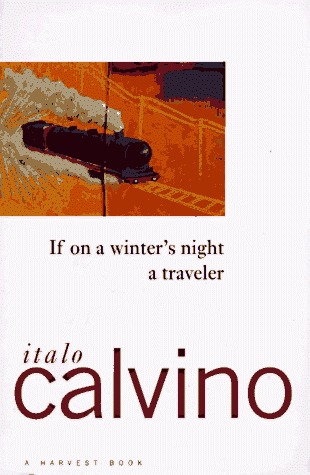
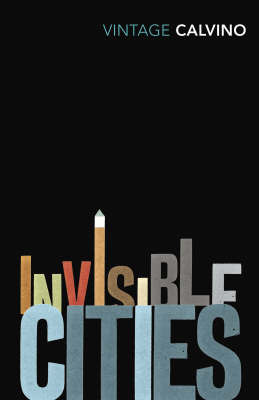
From city to story: Following the theme of megacities, i also revisited the book "Invisible Cities" by Italo Calvino.. (blog note Invisible Cities, Forgotten Highway), and then remembered he has a second book i wanted to read: "If on a Winter's Night a Traveler", "an experimental text that looks longingly back to the great age of narration-here's thh goodreads note", and of those books with more than 20.000 ratings: "If on a Winter's Night..."


A million stories
And the Million Story Award Editor Nomination List is online! It includes more than 70 online magazines, a great base to explore new magazines, new authors and new stories. Here's more: Story South Million Writers Award 

Browsing the list, I came across a story that won a Nebula Award for best short story last year, currently is included in the Hugo Award Voting 2013, and like Saga deals with the theme of identity in an interracial surrounding. It's a free online read, and has a goodreads entry with story link included: Immersion

more next week :)
have a great reading week!


*****

Book Links, Previous Reads & Finding Books

Previous reading blog entries are collected here: bookshelf: currently  reading... there also is a visual bookshelf, just click it to get there.

Reading around the world - i really enjoy this literal discovery-tour of the world, and it now made me go and pull some useful links together in a blog post: Finding books by country: helpful links + resources

More monday reads from other bloggers: link list at book journey

And my own book... is Worl(d)s Apart. True.


Monday, September 24, 2012

Ayiti, Africa, and stories that aren't a story (global reading challenge)


Around the world in 2 ways of voices
Currently i am reading books (and essays) for the global reading challenge i am joining this year. The challenge rules are simple: to read books from each continent. An aspect that i only noticed later: the guidelines don't address is the nationality of the authors. You can easily read around the world and still stick with authors that entirely belong to your own hemisphere. Which will make it a very different read (and world impression) compared to reading around the world in the voice of the authors of the different continents. That's a thought i kept returning to while reading "Ayiti" by Roxane Gay, and "African Sunrise" by Nnedi Okorafor.

**

"Every news story ever written will begin.."
Ayiti - Roxane Gay
I know Roxane from her essays, i think we even conversed in comments somewhere, but it wasn't until January 2010 that i realized her family is from Haiti. It was a day after ther disastrous earthquake when i followed the link to her blog note All Falls Down. Reading it moved me, especially with the outlook that now feels translucent and painfully turning to reality: "Late this evening, my mom and I were talking about how the before and after pictures of the slums looked mostly the same. That is the real tragedy of Haiti. When a natural disaster strikes the developed world, you know somehow, some way, that that place will rebuild. I am skeptical that Haiti will be able to recover from this disaster." 

Until that point, Haiti was a place i only knew from the news until then. Later that year i read Roxane's story "Things I Know About Fairy Tales" (written before the quake). It tells about a common thread in Haiti: "Kidnapping is all anyone with any kind of money talks about in Haiti, everyone in a fragile frenzied state wondering when it will be their time. It was a relief, in a sense, to know that my time was up – to know that this day was the day I would be taken."

The story is also included in Roxane Gay's collection "Ayiti" - most of the stories in the collection are short, told from different angles, from male and female lifes, and together they form a mosaic that give a glimpse in Haitian society and life from the inside. And it was a longer passage in one of the stories that made me aware of the printed voices again, the inside and outside views, stereotypes and media simplifications. The story is about Nicaragua, which followed Haiti in being the poorest nation in the Western Hemisphere:


When I reached the end of Ayiti, i wished for the follow-up stories, and (fairy-tale like), for a happy end. At the same time, i could sense how difficult it probably is to write about a homeland that is suffering.

**

"A story is not a story until it is told."
African Sunrise by Nnedi Okorafor

Another thing I am more aware of these days is how i find books, or rather: which suggestions i follow. i notice a shift to personal suggestions, be it a reading note from a fellow blogger, or a twitter link from an editor or author i know. For "African Sunrise"; it was a tweet by Jason Sanford, editor of StorySouth and organized of the Million Writers Award.

"African Sunrise" is a novella, published online at Subterranean Press. It caught me with the introduction, and its focus on storytelling - it's a sci-fi story, but at the same time, it's a story about voice and storytelling, and about the human tendency to experiment, even when it comes to the human genome.

These are the starting lines:

Specimen
There is no book about me. Well, not yet. No matter. I shall create it myself; it’s better that way. To tell my tale, I will use the old African tools of story: Spoken words. They’re more trustworthy and they’ll last longer. And during shadowy times, spoken words carry farther than words typed or written.

Some pages later, this line: "A story is not a story until it is told. I've always believed that a story is best told in many ways."

And this line: "It looks like your skin is nothing but a veil over something greater,” he said, after an appraising look."

Curious from the reading, i looked Nnedi Okorafor bio, and arrived at this brief version: The American-born daughter of Igbo Nigerian parents, she has regularly visited Nigeria since she was very young. Her novels and stories reflect both her West African heritage and her American life (more). Which probably also reflects in lines like this:


**

Singular Models & to be singled out

While I was reading African Sunrise, an essay that focused on the theme of story and voice went online at Rumpus, written by Matthew Salesses, an Asian-American author, who talks about the difficulties of growing up as non-white American in a world where white is the norm, here's a quote from his essay Different Racisms II: On Jeremy Lin and Singular Models: "I love books. I loved them as a kid. I could get lost in a book completely, closing off the outside world. .. But I was never able to have that moment, which I realized other kids had, where the character seemed to be me. I was always aware that I was reading about other people. Sometimes people I wished I was. White and with secret powers."

And it's only now while putting this together i notice the ending words: "secret powers" - which is exaclty what the main character in African Sunrise possesses, underneath her non-white skin. Another noticing: the theme of mutation / evolution also was a focus theme in some of the Hugo Award Winning Reads, here's my blog note from 2 weeks ago on the theme: Global reading challenge: reading the Hugo Award Winners 2012

In his essay, Salesses also links to an essay of an Asian-American author who was bullied in her youth and who confronted her former school-"friend" later about this time: Interview with my Bully by Marie Myung-Ok Lee

History and story 
Which also connects back to a line in the history book i am reading: that history usually is the story at it is noted down by the ones who won the dispute at question. Maybe that is why the english word history includes "story". The German word for history, by the way, is "Geschichte" - which also is the word used for "story" in general.

More about my current reads, next week. Below, some further links:

*****

It's Monday! What are you reading? + Previous reading blog entries
this blog post is inspired by the blog series "It's Monday! What are you reading?" which is hosted by Sheila at Book Journey. it's a blog initiative to share ones own reading and to see what others are currently reading. participating blogs are listed in this Linky Book List


Previous reading blog entries 
are collected here: bookshelf + monday reads
there also is a visual bookshelf, just click it to get there:

Saturday, August 11, 2012

raw : review : reads


raw
the new photo friday theme is "Raw" - it brought me back to the raw coastline of Lanzarote island, which, seen from a world timeline perspective, was only recently formed by vulcanoes. and on the theme of recently formed:

*

reviews
the new issue of blueprintrview is now finally taking first shape. the theme of it will be re:view, here's a bit more on it: announcing BlueprintReview #30, the RE:VIEW issue & call for (you guessed it) reviews

the issue actually will consist of 2 parts / places: there will be the normal issue on the blueprintreview page, including a combination of reviews and of texts on writing/reading/reviewing. and as there are so many books out there, and an issue can only be that large, there will be a space to share reviews.

*

reads
some links to weekend reads:

following the theme of reviews:
The Art of the Book Review: Barrett Warner, interviewed by Karen Lillis
some quotes from it: "The printing press democratized literacy, but the Internet democratizes art." - "It’s important for reviewers to know their poetry, but it’s also important for reviewers to come from whichever culture they’re writing for."

following a sidebar link, this leads to Confessions of an Indie Bookstore Clerk by Karen Lillis:
Bagging the Beats at Midnight - which leads to a place i've been to last year: Paris, and the Shakespear bookshop (and makes me remember that there still is a story from there that waits to be written): A Bookman's Holiday in Paris . Also included, this: People who led to my self-publishing.

more non-fiction, and i don't even remember how i arrived here:
bio-Stories - Sharing the extraordinary within ordinary lives

from bio stories to stories at large:
How stories make us human from Richard Gilbert's blog Narrative

which leads to
The Moral of the Story - review of ‘The Storytelling Animal,’ by Jonathan Gottschall in the NY Times Sunday Book Review

which also includes an essay on the world and the universe:
‘Why Does the World Exist?’ by Jim Holt with this glorious opening line, which also ends this roundabout: "There could have been nothing. It might have been easier. Instead there is something. The universe exists, and we are here to ask about it. Why?"