Showing posts with label reading challenge. Show all posts

Monday, January 11, 2016

global reading: Ice Bound (or: penguins, Antarctica, Endurance + how to count life)


So there it is: the new 7 continents reading challenge. Now where to start - how to pick the first book when you have the whole world to choose from? 

Maybe Antarctica, I figured. It's the only continent I so far haven't read a book from, as there are just not that many people (and thus, even less authors!) living there. Which also fitted with this humorous facebook conversation:
7 Continents, 7 Billion People, 7 Books! For 2016, there is a new world reading challenge starting. To join the challenge, select and read seven books, one book from each continent.
- Diana: Are the antarctic books written by penguins? :)
- Chris: 7 billion penguins. :)
- Doro: That would be something :) like the typing monkeys: typing penguins.
In fact, Antarctica is the only continent without any permanent human residents. But there are some books set in Antarctica written by people who lived in the polar stations, and a number of expedition books (old and new). Here's a goodreads list: Non-fiction books set in Antarctica

Before delving into the books, I read a bit more about Antarctica. Some rather stunning facts:
  • Antarctica, on average, is the coldest, driest, and windiest continent of the world. 
  • Despite all the ice, it is considered a desert, as there is almost no percipitation. 
  • At 14,000,000 square kilometres, it is the fifth-largest continent in area after Asia, Africa, North America, and South America. For comparison, Antarctica is nearly twice the size of Australia. 
  • About 98% of Antarctica is covered by ice that averages 1.9 kilometres (1.2 miles) in thickness. 
  • There are no permanent human residents, but anywhere from 1,000 to 5,000 people reside throughout the year at the research stations scattered across the continent. 
  • There are some permanent animal residents living in Antarctica, though. Among them: the aforementioned penguins! (But no polar bears, they live in the Arctic region)
  • More here: Antarctica/wiki
*

Ice Bound: A Doctor's Incredible Battle for Survival at the South Pole
When I browsed the goodreads list, there was one title that instantly caught my attention: Ice Bound. What fascinated me about it is that it's about the daily life in the South Pole station, written from a doctor's perspective. And that it turns from a casual pole station book to a memoir of a doctor who turns into a patient. Which at the pole in winter means: there is no outside help, and no other doctor. The book also includes some photos, I tried a short vine-video to give an idea:


Here's the book description from Publisher's Weekly:
"Nielsen spent the better part of 1999 as the physician for a team of 41 research scientists and their support group at the South Pole; a place that is completely unreachable for nine months of the year. To "winter" at the bottom of the world risks one's life; in addition, Nielsen was solely responsible for caring for the physical and emotional health of all the other "Polies." Yet, as she writes in a strong, lucid voice, she never felt afraid; in fact, as Nielsen became "of the Ice", a transformation that brings incredible clarity about what's most important in this life, one that unites the Polies in a life-and-death symbiosis in a place where resources are severely limited and the pristine beauty is incomparable. Through power outages, fires and equipment failures, Nielsen found courage, until the day-deep into the pitch-black winter-she absentmindedly discovered a hard mass at the top of her right breast... Captivating and incisive, Nielsen does not present a memoir about illness; instead, this excellent book is about life, work and the depth of human resiliency and love."
The world in an ice dome, or: what we can, what we can't  
What amazed me when I read the book was the wide spectrum of themes it included - the pole station is like a microcosmos of our civilization. Adding to that, maybe the combination of both our human virtues and our vulnerabilities stands out even more in this region where we naturally wouldn't be able to survive.

And of course, Nielsen's reflections on her own illness and the therapy spoke to me after I had been a breast cancer patient, too, just recently. But then, just to think that year after year, dozens of people go to the pole to live there - knowing that it is physically demanding, with the darkness, the high-altitude effect, the frostbite, the risk when you are out just some minutes too long - and the fact that there will be no way in or out. It's a survival challenge, only that you volunteer to go there.

It also shows how much we are able to do, and how we at the same time are still at the  mercy of fate: on the one hand, we can build a pole station and live there during the arctic winter. We can build satellites and bring them into orbit, and thus create a world-wide satellite net. We invented the internet, and combined it is possible to connect to the world from anyplace, and have all the information that is out there at ones fingertip. But on the other hand, we are still trying to figure out how our world works, and how cancer happens and how the cure for it - or a prevention of it altogether - might look like, and same with Altzheimer. We came a long way, and have countless libraries filled with knowledge, but we still don't know how to prevent catastrophes, or wars, or the next wave of flu...

But back to the book, or rather: to books. The pole station has an own small library, and it includes the books of the first Antarctica expeditions. And so "Ice Bound" transcends from the present to the past of the pole, to the first explorers, and the power of the word, the way it can share experiences and bring comfort. The quote in the video is expressing a lot in just a few sentences:
"When I was feeling my worst, Big would sit up next to me at night reading passages from Endurance... The story of Shakletone's struggle in 1915 to survive and keep his crew alive touched me deeply and comforted me. He was the explorer who best understood the wild, seductive lure of Antarctica. "I have ideals," he said," and far away, in my own white South, I open my arms to the romance of it all."
Shackleton's name also appears in a reflection at the end of the book, after the first rays of sun finally start to show again in the polar region, and the isolated station time there starts to come to an end:
"We all wondered if, like Scott and Shackelton, we would be compelled to return again and again, trying to relive the exhilaration of our first time on the Ice, and the rapture of being alive."
I followed the book, and looked for Shackelton's notes - and found that there is an e-book at the Gutenberg Project: South! The Story of Shackleton's Last Expedition, 1914-17
About Project Gutenberg: it's a digital library of free e-books. It's a good and different place to browse (it's one of the things I try, parallel to reading books from new places: to also try new places to find books). And a nice addition of Gutenberg: the book opened nicely directly in the tablet;


So I read into the past for a while, following Shackleton's Voyage. There is a second book, a collected memoir that I might also visit, by Alfred Lansing. Here's the note for it:
"The astonishing saga of polar explorer Ernest Shackleton's survival for over a year on the ice-bound Antarctic seas, as Time magazine put it, "defined heroism." Alfred Lansing's scrupulously researched and brilliantly narrated book -- with over 200,000 copies sold -- has long been acknowledged as the definitive account of the Endurance's fateful trip. To write their authoritative story, Lansing consulted with ten of the surviving members and gained access to diaries and personal accounts by eight others. The resulting book has all the immediacy of a first-hand account, expanded with maps and illustrations especially for this edition. (Goodreads)"
The immediacy of a first-hand account - that's also what makes "Ice Bound" so touching. Nielsen isn't afraid of the larger topics. There are funny stories included, too, but there are also the tougher days included. Maybe this quote sums it up:
"I don't believe that life can be counted by years or days, but by experience and how you leave the world by the way you live."

Reading Links 
So that was my first "continent", or rather: first book of the world reading challenge. Here are some additional links:


And some pole links:


Wednesday, March 4, 2015

Global reading notes: sidetracked, an unknown bestseller, Indonesia + Tasmania


Sidetracked between continents...
The plan for last week was: to read the next book for the 7 Continents Reading Challenge. It didn't really work out. Instead, I read a 5-million-copy-bestseller book that I hadn't heard about before: The Rainbow Troops (more about that, below). And then followed book blog links... and got even more sidetracked, in a good way. As it turns out, there are 2 book blogs that run short theme challenges - and both are interesting and inspiring, and connect to international books that are waiting in my shelf. So March will be the month of sidetrips and stop-overs for me.

Classic novel challenge
Book blogger John Wiswell from the "Bathroom Monologues" runs a yearly reading challenge for classic novels: "This is an annual tradition encouraging people to read the classic novels they've been putting off, because everybody has a few"... more here:  National Novel Reading Month

I will join with a classic of the different kind: "Maus" by Art Spiegelmann, published in 1991, is a classic in the world of graphic novels, and also the first graphic novels that won a Pulitzer Prize.

Eastern European Lit Month
"Winstonsdad's Blog" is a reading blog that focuses on global books - and this month, it will all be about books about / from the former USSR. The idea: "reading books from what made up the soviet bloc behind the iron curtain before it fell", here's the link: Welcome to Eastern European Lit month

I will join with the memoir "Picnic at the Iron Curtain: A Memoir: From the Fall of the Berlin Wall to Ukraine's Orange Revolution" by Susan Viets - the book won the 2013 Next Generation Indie Book Awards finalist's award.

7 Continents reading challenge 
The 7 continents challenge started in January, but it's open all year round, and there are still new readers joining. This week I browsed blogs and links, and now am tempted to get some of the books, too, especially the ones from France and South America. Here are some links:

**

Reading... into Indonesia and Tasmania


And here are the reading notes from last week:

Rainbow Troops: Andrea Hirata
The “Rainbow Troops” is a memoir from Indonesia, it tells the story of a village school with compassionate teachers who encouraged kids to keep learning – one of thee kids was Andrea Hirata, author of the book.

The touching and surprisingly positive story turned into a huge bestseller in Indonesia, with over 5 million copies sold. It's also a beautiful and inspiring read about the power of knowledge and learning, and the power of magic of books and stories. Here's a summary: "The poverty-stricken school suffers the constant threat of closure by government officials, greedy corporations, natural disasters and the students’ own lack of self-confidence. The story is written from the perspective of Ikal, who is six years old when the novel opens. Just as the author himself did as a young man, Ikal goes to college and eventually wins a scholarship to go abroad, beating incredible odds to become a writer."

I arrived at the book through the Guardian "best books from".. series, and probably will go and see what they suggest for other countries. So far, the reads from there all have been really good.

Past the Shallows by Favel Parrett 
This book... was a wrong order: I read a German book review of Parrett's latest book, which is a book that leads from Australia to the South Pole...and ordered an English copy. Well, turns out, I ordered the "wrong" one: Past the Shallows is set in Tasmania, and in many ways is the counterpart of Rainbow Troops: it's the story of 3 brothers who live with their father, an abalone fisherman, on the south-east coast of Tasmania, and they don't have an encouraging teacher, but have to deal with a troubled father and a painful family secret. It's a sad story, but written in a beatiful poetic voice - and it's probabably the story of many kids who are up against the odds of life.

**

Global Reading Challenge 2015 + Currently Reading:

For 2015, I try to read books / authors from different countries, the idea is to visit all continents. If you want to, join the reading challenge: 7 Continents, 7 Billion People, 7 Books - or just join the international facebook reading group.

Countries / regions visited so far: most population: China , highest coutry/region: Himalaya.

For more reading notes, click here: life as a journey with books. A reading list by regions is online at: World Reads by country


Tuesday, July 30, 2013

7 continents reading challenge: Megacity books, maps, walks, lists..


Megacities
The fourth task of the 7 Continents, 7 Billion People, 7 Books Reading challenge is to read a book from one of the megacities of our world.

When does a city turn into a megacity? 
One of the most common definitions for a megacity is: a metropolitan area with a total population in excess of 10 million people. Following this definition, the first megacity of the world was New York City, which reached the 10 million mark in 1950. Today, there are about 30 megacities, with the largest of them situated in Asia.

**

Megacity list + map

The 7 largest megacities
  • Tokyo, Japan (35,6 mio) 
  • Jakarta, Indonesia (28,1 mio) 
  • Seoul, South Korea (25,6 mio) 
  • Shanghai, China (25,3 mio) 
  • Karachi, Pakistan (23,5 mio) 
  • Mexico City, Mexico (23,2 mio) 
  • Dehli, India (23 mio)
European + American megacities
Here's a look at megacities by continents:
  • North American megacities:
    New York (#11)
    Los Angeles (#22)
  • European megacities:
    Moscow (#15)
    London (#28)
    Paris (#30)
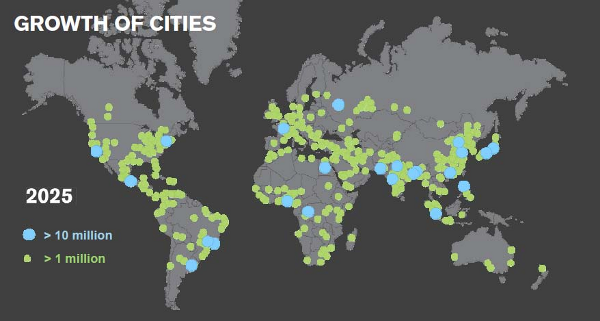
All listings above are based on the megacity statistic in wikipedia. The eductional website wfs put a map together that both inludes large cities with a population of more than a million citizens, and megacities with more than 10 millions - and arrives at the following map:


From countryside to city
Some interesting key facts connected to megacities: Our world is a world in change:  for the first time, there are more people living in cities than in rural areas - a dramatic shift in human history. In 1800, only 3% of the world's population lived in cities. Now it's every second person. And many of those who move to big cities start live there in slums: almost one-seventh of the world's population  - one billion people - now live in shanty towns.

*

Books set in megacities
It's not easy to find books set in megacities - when searching books by city name, or by the keyword "megacity", often travel guides come up, or non-fiction books, but there also are some book lists that refer to fiction set in cities:
*

Megacity book list


"It would be handy to have a booklist that focuses on megacities" - that was a thought that repeatedly came up while looking for megacity books. And as Goodreads makes it easy to start lists, I now pulled together the information from the various sources and started a megacity booklist The list focuses on novels and short story collections set in megacities, here are some recommendations with short summaries:
  • Tokyo: “After Dark” by Haruki Murakami is a novel set in metropolitan Tokyo over the course of one night. 
  • Seoul: "Please Look After Mom" by Kyung-Sook Shin is a bestseller in Korea: a stunning family story set in Seoul and rural Korea 
  • "Shanghai Baby"  by Weihui Zhou - Set in the city of Shanghai, the novel follows the days, and nights, of Coco, who waits tables in a cafĂ©, and provides an alternative travelogue into the back streets of a city and the escapades of today's liberated youth. 
  • "Paris Was Ours": 32 different perspectives on living in this European megacity Paris– some from the city centre, some from the outskirts
  • "Brick Lane": a novel that leads from the mud and heat of a Bangladeshi village to a flat in a high-rise block in London's East End
  • "Open City": a novel that both tells about migration, life, and guilt, and that reflects on city life – it leads from New York to Europe and Africa, processing both personal and historic past and present.
  • The full list is online at Goodreads / Megacities, feel free to add own reads and recommendations for megacity books.
**

Walking the world's megacities

The Guardian is featuring a  megacity travel guides series  this year, with photo galleries, megacity walks, audio slideshows & more. Starting in January 2013, this series so far includes Tokyo, New York, Mexico City, Shanghai and Seoul


*

More Megacity links

CNN Urban Planet
Half of the world's population already lives in urban areas -- and that figure is poised to swell. The United Nations estimates that by 2050, more than two-thirds of the world's population will live in cities. With the rapid pace of urbanization, the race is on to improve the quality of life and health of city dwellers. Urban Planet explores what's being done to create better cities and better lives for the people who live in them.
Megacity wiki: http://en.wikipedia.org/wiki/Megacity

Megacities Film
Film director Michael Glawogger created a trilogy of globalization films - one of it focuses on "Megacities". more about it here: Glawoggers's GlobalizationTrilogy. The subtitle means: "12 stories of survival".

Megacity Research Project
An international, interdisciplinary research program that consists of 10 projects, including research in the Pearl River Delta (China) and Dhaka (Bangladesh).

World future society
An educational website with focus on future trends. The map above is part of their article: 
In 2025 630 Million of Us Will Live in 37 Megacities

**

Global Reading Challenge

This blog post belongs to the 7 Continents, 7 Billion People, 7 Books Reading challenge - more direct links:

A book from one of the 7 countries with the most population

From most populated to the mountains:
A book from one of the 7 highest countries in the world

From high to old:
A book from one of the 7 oldest countries of the world

Monday, July 8, 2013

reading: Blue Hours + Yellow + (non)-Fairy Tales + film critics by Hulk

This blog post is inspired by the general joy of global reading, a blog series, a new online lit course and a reading challenge. More, at the bottom of this post.


This week's reads indeed are old and new, borrowed and blue...

Blue
I went to the library a couple of days ago, browsing books and hoping to find the right read without being able to name it - and found it: "Blue Nights" by Joan Didion, which is titled "Blue Hours" in German.
It’s a book that is both melancholic and so full of life: the whole book is a life reflection, non-fiction, a dealing with growing older, and being the one left of the family she and her husband and their adopted daughter were.

Here's a quote that sums up the theme and mood:
“Vanish.
Pass into nothingness: the Keats line that frightened her.
Fade as the blue nights fade, go as the brightness goes.
Go back into the blue. I myself placed her ashes in the wall.
I myself saw the cathedral doors locked at six.
I know what it is I am now experiencing.
I know what the frailty is, I know what the fear is.
The fear is not for what is lost.
What is lost is already in the wall.
What is lost is already behind the locked doors.
The fear is for what is still to be lost.”
 ― Joan Didion, Blue Nights
For more about the book, and more quotes, try the Goodreads page: Blue Nights 

*

Yellow
From color, Didion's "Blue" book reminded me of a book i have here since a while: "Yellow" by Don Lee, a book of short stories that are interconnect in a fictional city, and all circle the theme of immigration / culture / race from different angles. Don Lee's family is from South Korea, and he lived both in Seoul and in Tokyo as a child, and now lives in Boston. The book is called “Yellow”, and of course, comes with a yellow cover. so it’s blue yellow reads for this weekend.
Not an easy read, but intense and human, the stories form a window and sometimes a door into being someone who has no easy, single answer to the question: "Where are you from?" and "What are you?" - someone who is called with the words "'ello, 'ello", and thinks the other means "Hello" - until the understanding sinks in that the 'ello is mocking him as "yellow". -

The most important painful question the book poses probably is: how to deal with a world that comes with prejudices, and how not to let those prejudices narrow your world view, and start to be the theme of your days, turn into the narrative of your life story. Which is masterfully done, by stories that circle exactly this narrative.

*

Fairy Tales
While looking for some web link, I came across a story again that remained in my mind since the first time I read it, a story that is set in Haiti, and like Yellow, opens a window into another world: "Things I Know About Fairy Tales" by Roxane Gay is an exceptional non-fairy-tale-story that also is about what we weave into the narrative of our life, and what we pull out:
"Once upon a time, not long ago, I was kidnapped and held captive for thirteen days. Shortly after I was freed, my mother told me there was nothing to be learned from what had happened to me. She told me to forget the entire incident because there was no moral to the story."
*

Hulk Film Critic, or: The importance of Story and Character
And now, a very different read: an essay on modern superhero movies. Which, in fact, is an essay on much more: it's a reflection on story, character, the ethos of blockbusterdome, fakes, growth and truth.

It's written by Hulk. And it starts with this neat introduction:

PART ONE - A SERIES OF UNFORTUNATE INTRODUCTIONS 
PLEASE NOTE: THIS ESSAY HAS FOUR DIFFERENT INTRODUCTIONS. SORRY BOUT THAT, IT'S JUST THAT WE'RE ULTIMATELY GOING TO NEED THEM ALL.
...and includes priceless passages on mankind and subjectivity like this on:
BUT WHILE EVERYONE IS CERTAINLY ENTITLED TO THEIR OPINION THAT DOES NOT MEAN THAT EVERYONE IS ENTITLED TO THEIR OPINION BEING RIGHT
Don't get tricked by the all-capital sentences, or by the title. By the way, a good way to read it, is to copy it and read it on an e-book reader.

Film Critic Hulk Smash: The importance of dramatizing character


*****

Book Links, Previous Reads & Finding Books


Previous reading blog entries are collected here: bookshelf: currently  reading... there also is a visual bookshelf, just click it to get there.

Reading around the world - i really enjoy this literal discovery-tour of the world, and it now made me go and pull some useful links together in a blog post: Finding books by country: helpful links + resources

More monday reads from other bloggers: link list at book journey

And my own book... is Worl(d)s Apart. True.

Monday, January 14, 2013

reading: What book!? (or: a Paris-novel, a book-book, a what-book, and Nobody)

this blog post is inspired by the blog series "It's Monday! What are you reading?" which is hosted by Sheila at Book Journey. more about that, at the bottom of this post.


Paris, or: The Elegance of the Hedgehog..
..is a longtime bestseller in France, set in Paris and written by Muriel Barbery. The book was published in 2007, it so far sold over 5 million copies worldwide. The Booklist review includes a disclaimer that made me curious for it: "A critical success in France, the novel may strike a different chord with some readers in the U.S. The plot thins at moments and is supplanted with philosophical discourse.."
For me, i enjoyed the starting chapters, but then almost gave up when the plot indeed kept stretching, and the characters got lost in discourse and prejudices (which may be intended: this feeling of stuckness that the reader experiences there, together with the characters). and i'm glad i stayed with it. the second half is stronger, more vivid, and lets the characters find their way into a more open atmosphere: connection instead of isolation, the simple joys of life instead of abstract philosophy. 

(& an addition: the novel has been turned into a film, here's the Hedgehog trailer, which gives an idea of the mood of the novel, too)

The reason i picked the "Hedgehog"..
With the new year, the new book challenges are starting, and for the "Around the World in 12 books" challenge, January leads to France. and so i browsed several book lists in December, and arrived at the "Hedgehog".

Like a novel ("Wie ein Roman")
With the turning of years, i also re-sorted my bookshelf, and came across some books that still wait to be read. One of them is a book on books: "Like a novel" by Daniel Pennac. After enjoying the recent books-on-books i read, "Ex Libris", I opened this one at random, started to read, and now read it from middle to end, and then from start to middle. (true). sadly, the book isn't translated into English yet - Pennac is a french author, i learned after reading half of it. So this book also fits into the "January = France" category.

What Book!?
And now a very different book-story, with some book-searching-and-finding included. In December, my editor&publisher Jessi Graustein blogged about a book discovery: all the books she so far has published have the theme of "Home" running through the manuscript (here's her blog note: Subconscious Drive (of Home). Reading this, i remembered a modern Buddhist tale in once received in a mail, which also was about home. Back then i tried to find the author, but to no avail. So i looked for the mail, and then tried again, copying the first line of the story into google: "Last fall the Dalai Lama came to New York City to do a two-week ceremony called the Kalachakra which is a prayer to heal the earth."

Learning by Doing: Google Full Text Search Options
And now, surprise: Google came up with the full story. in Google Books. i hadn't known that this is possible, and it's both exciting and a bit scary: you can now search for poems and short stories or passages and paragraphs in an extensive full text search.

The comical thing that i first didn't get was the statement that came up, though: Google Doc said in the sidebar: "What Book!?"...

...which actually is the title of the book: a collection of Buddha Poems, also available as e-book. i ordered the e-book. it's quite a find, with poems written by Japanese monks as well as by international guests of retreats - including Yoko Ono.

Here's the screenshot and link of my search&find: "Google Docs: What Book!? Buddha Poems"


Carl Tohrbergers Christmas
The fourth book i read last week - is a subversive brief collection of 3 short stories, written by Ferdinand von Schirach, a judge who writes. 2 of the stories have the theme: what happens to a life when you mainly try to stick to the rules and expectations? the main character in the longest story is.. a judge. And now i just  checked: his books have been translated into English, here's his wiki page.

From France.. to Pakistan and into a Smalltown 
After France, the next regional focus of my reading journey will move towards rather different places and formats: first, for the 7 continents reading challenge, is a Granta collection of Pakistan waiting, which also is my first Granta collection altogether. here's the link to the online version with some selected reads: Granta Archive "Pakistan".

  
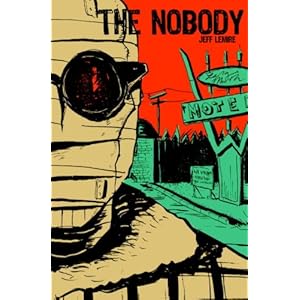
and i started to read a modern version of H.G. Wells classic "The Invisible Man": Jeff Lemire turned it into a smalltown graphic novel with the title "The Nobody" (if you are interested in graphic novels, i blogged about reading them here and here)

 *****

It's Monday! What are you reading? This blog post is inspired by the blog series "It's Monday! What are you reading?" which is hosted by Sheila at Book Journey. participating blogs are listed in this Linky Book List

Previous reading blog entries are collected here: bookshelf: currently  reading... there also is a visual bookshelf, just click it to get there:


Sunday, December 23, 2012

7 countries with the most population – global reading challenge


The 7 countries with the most population

The first task of the 7 Continents, 7 Billion People, 7 Books Reading challenge is to read a book from one of the 7 countries with the most population. According to the wiki list countries by population, the top 7 countries with the most population are:
  • China (1300 Million)
  • India (1200 Million)
  • USA (314 Million)
  • Indonesia (237 Million)
  • Brazil (193 Million)
  • Pakistan (181 Million)
  • Nigeria (166 Million)
Here are the relating country reading links, from Goodreads:
Goodreads / China  --  Goodreads / India  -- Goodreads / US best of  -- Goodreads / Indonesia  -- Goodreads / Brazil  - Goodreads / Pakistan --  Goodreads / Nigeria

For more book links, visit: Finding books by country: helpful links + resources


**

Around the globe
For some virtual globe spinning, try this short world video that shows the 25 most populated countries and their location on the globe:


**

A world in change - 2 global docus 

If you are interested, there is a fascinating documentation online, a report of a journey across 3 continents by a journalist who tries to chart the phenomenon of Chinese migration. The docu starts in Africa, moves to America, and to Asia. It inlcudes a lot of encounters with citizens and immigrants, and also shows city and road scenes from the countries. It's also up on youtube:
And here's another docu on the theme of population:

Tuesday, July 31, 2012

in Mexico with Rose Hunter (or: reading A Foal Poem)


For the last couple of days, i've been in Mexico every morning for some minutes. It's one of the countries i've never been to myself, but that doesn't feel all foreign - there even is a city i walked through in images and in lines repeatedly: Puerto Vallarta, home of poet + friend Rose Hunter.

Her book A Foal Poem is both a collection of poems, and a poetic travelogue that takes the reader into the inner reality of places, beyond the tourist facades. it starts with a map, and my first touch of it was "Aposematic" - a poem that was first published in BluePrintReview, here's one of its road lines:

me the butterfly and you the relentless road,
with zircon glints
!


Later, another poem become base of a collaboration that moved through several places: Puertos, and on the third page, it's Puerto Vallarta again, with its beach road, the MalecĂłn:

concrete for miles, yet
it's this section
of the MalecĂłn
that has been
chosen for
soapy water
bucket
bleach

Finally, when Foal took shape, i helped with the cover- the image is based on a street scene from Vallarta, and the process of getting the cover together for POD later lead to a (rather unpoetic) how-to-entry in the blueprint book blog: How to create a book cover for print-on-demand services like CreateSpace

but back to Foal:
I first read the book right after it was published, and now am revisiting it, and like with journeys, when visiting a place again, you see more, the details, the patterns forming within, how one place and thought leads to another. maybe that started already during the first read, when at some point, i felt drawn to gather lines for a found poem, which eventually got published in the Found Poetry Review: Or, a Moral Inventory

Someone recently said: "With books like this, I don't need to travel, I get there in words" - and this is how Foal feels to me, this touch of another place, woven into pages that wrap you up while reading - and like with most foreign places, it takes a bit to get into this different world that comes with rebar houses and tejones appearing - until, at some point, those become part of your own  vocabulary, and you find yourself, walking along a relentless road, thinking of a foal. 
--

Book link, About,  & Review Forward

For more about Rose's book Foal, her bio, and her other books, visit her website

Some lines about me: I'm into roads, stories, places, crossings, and all the things they lead and connect to. I edit BluePrintReview and the blueprint book + lit blog. For more of my personal book reviews, click here: "Books", and for a bit more about me and the web projets i'm involved in, visit me at blueprint21. Apart from being an editor and blogger, I am also an author myself. My new book Worlds Apart just launched, and Rose was one of the authors who read an early version of it and accompanied the whole process that leads from draft to final book. Thanks for that!

Worlds Apart - a true story about 2 friends, 2 journeys, and 10 life lessons:  
In the global world, a traveler from Europe and a teacher from Asia meet in the web, share their journeys, and the joys, longings, and life lessons that wait along the road. Captured in letters and photos that reach from China and India to Germany and the Mediterranean Sea, a dialogue across continents and cultures unfolds: Worl(d)s Apart

Review Forward: This book review is inspired by Review Forward, a new online initiative for authors & book bloggers. For more reviews, visit the facebook page or the twitter-stream.

Wednesday, July 11, 2012

zen and the empty city (global reading challenge)


Zen Mind
there's a book i am reading since last November: "Zen Mind, Beginners Mind". the classic zen book by the Shunryu Suzuki, the founded of the first western zen monastery. with its 147 pages, it's not a thick book by size. but it's like an ocean of thought, with chapters about Practice, Non-Dualism, Attitude, Self-Study, Emptiness, Attachment, Experience and so on. each chapter is but an entry door, and it definitely makes sense to combine the reading with actual zen or yoga practice iself. it's similar to something like swimming: despite all the books about it, you have to get your feet wet at some point to connect to water. and vice verca, while getting your feet wet, a book can be a guide in the big ocean, a pointer between the waves of daily life.

here's a (slightly shortened) quote from the Zen book, a "metazen" reflection on talking about zen:
The purpose of my talking is to give you some idea of the way, but actually, zen is not something to talk about, but something to practice. The best way is to practice without saying anything. If we understand this point, then talking about it will be one of our practices, and listening to the talk will also be practice. And we listen withouth trying to figure out some intellectual understanding, without trying to understand from just a one-sided view.

which leads to the book that sparked this blog entry:

The Empty City by Berit Ellingsen

most of the books about zen are non-fiction: biographies, introductions, collected lectures - but recently i arrived at a zen-novel, writen by Berit Ellingsen. It was an interview in Nonduality Magazine that made me curious for it, in it, Berit explains:

"The Empty City is a short novel about nondual awakening, becoming comfortable with silence and letting go of the past. Connected themes are questioning your own beliefs and what you regard as yourself. .. I wanted to write a novel about nondual awakening, where that was central to the story. There's a lot of nondual nonfiction and poetry, but little fiction. I was curious to see if it was possible to write at all." (interview link)

reading this, of course, made me curious for the narrative of Empty City. i finished it a week ago - it's a thought-provoking, vivid read, with short chapters that move through to different level of consciousness - there are dream sequences, past memories, the present - together, the chapters form a larger mosaic. it was one of the books that i didn't want to end yet, to move on, and on. i looked for a quote to put here, but like with physical mosaics, pulling out a single piece only hints briefly at the larger image.

reading through it also points out how used we are to the established forms of narrative, and it's both refreshing and at the same time perplexing in the best of senses to follow another format - the concept of the Koan comes to mind, the riddle-like stories or notes used in Zen-pracitce to provoke the mind. It also made me think of reading "Open City" by Teju Cole earlier this year, and the line i wrote back then refers to "Empty City," too: "It isn't the typical novel, it's more on the experimental side. While reading it, i looked for interviews with the author.." (here's the Open City blog post)

the book is available both as printed book and as e-book. i picked the e-book version, which makes it my second novel read on the kindle, the first was Wild - and i guess the intro picture shows it: it's too bad that e-books don't come with the cover image - especially that in this case, the cover feels like a physical part of the story mosaic, a part of the narrative almost.

summed up, i would definitely recommend it for readers who are a) into zen / yoga and/or b) into experimental writing. if you want to read an excerpt, the first chapters are online on the book website: Empty City.

----

About me, more books, and Review Forward

For more about Berit Ellingsen and her writing, visit her author website

Some lines about me: I'm into roads, stories, places, crossings, and all the things they lead and connect to. I edit BluePrintReview and the blueprint book + lit blog. For more of my personal book review, click here: "Books", and for a bit more about me and the web projets i'm involved in, visit me at blueprint21. Apart from being an editor and blogger, I am also an author myself. My new book Worlds Apart just launched:

Worlds Apart - a true story about 2 friends, 2 journeys, and 10 life lessons:  
In the global world, a traveler from Europe and a teacher from Asia meet in the web, share their journeys, and the joys, longings, and life lessons that wait along the road. Captured in letters and photos that reach from China and India to Germany and the Mediterranean Sea, a dialogue across continents and cultures unfolds: Worl(d)s Apart

Review Forward: This book review is inspired by Review Forward, a new online initiative for authors & book bloggers. For more reviews, visit the facebook page or the twitter-stream.

Monday, June 11, 2012

taboos & role models: the myths of heroes


The great thing about second hand book shops is that they provide a space to come across books you otherwise might have missed - like this book about ancient Greek myths by Luciano De Crescenzo. Not sure who invented the German title ("Back when men were still allowed to be heroes") - the original Italian one is "I Miti degli Eroi" - "The myths of Heroes".

It's a brief book, 190 pages, yet De Crescenzo manages to provide both the ancient tales of The Argonauts, Herakles, Theseus, the Minotaur, and more - and puts them into their historic content with knowledge and wit, and many quotes from the original texts.

Greece, it's the cradle of democracy, and also the cradle of epic drama tales and heroes, all of which turned to role models for our Western culture. Interesting to note that in Greece, democracy didn't mean one adult = one vote. Slavery was a part of the Greek society, as was war - which made the figure of the hero so important as protector. Yet the heroes weren't free from fault, just like the Greek Gods they were wrapped in conflicts, desires and dramas, and were primarily warriors: "In Homeric Greek, "hero" refers to a man who was fighting on either side during the Trojan War. A hero was more than human but less than a god" (Greek hero cult).

Greek mythology also delivered the name for Europe: in the myth, Europa was a woman of high lineage, abducted by Zeus, who turned into a white bull to trick her, as he "was enamored of Europa and decided to seduce or ravish her, the two being near-equivalent in Greek myth". And just as the Gods, the heroes weren't exactly bound by ethics, either. (and how this story seems like a great name myth for a continent still is unanswered, here's more: Europa/mythology)

There's another taboo that didn't exist back then in ancient Greece: homosexuality was part of the normal culture. And it was just while reading the book that the Orange Prize winner was announced, and it turned out to be: Madeline Miller with ‘The Song of Achilles’ - a story based on the Trojan War, and on the friendship (and beyond it, the relationship) bewtween Achilles and his close friend Patroclus. Savidge Reads has a book review with a summary that goes for a lot of the Greek heroes, gods, and mortals of that time: "we soon learn the gods have stated a prophecy which isn’t going to reach a happy conclusion for anyone concerned". 

Two other bits of news that were announced in these days: the Orange Prize - which ranks as one of the most prestigous literary prizes, and was established to recognise the contribution of female writers - will change its name, as Orange ends its sponsorship. But that's okay, they supported it for a long time, despite the criticism the gender aspect caused - the prize was even accused of being "sexist", as if it hadn't been a noteworthy gender gap that initiated it in first place. Here's more, in an Alternet article on Book Prizes and the Literary Canon. Looking at the ratios mentioned in the article for the Nobel Prize or the Booker Prize, the gender gap is more than obvious. A fact that got highlighted by the second bit of news, about the Cannes film festival this year: guess how many films by female directors were shown there? (here's the answer: no, not even one).

~~~
Global + European Reading Challenge: In the read this year, i am taking part in a global and in an european reading challenge. the idea: to read books from each continent of the world / several countries of europe. here are the other books from the series: reading challenge

Taboos & Role models: Parallel to the reading challenge, there's a string of posts on books that touch the theme of taboos and role models. Well, a developing string: this is the second post. the first post is here: taboos & role models: the un-sanitized antiheroine + the next top model.

Friday, June 1, 2012

Slavery, or: Naming the New World (global reading challenge #19)


naming the new world
the next book of the reading challenge leads from Africa to America - "Naming the New World" by Calvin Baker. i read the German version, which has the slightly different title: "Into the new world".

it's a book that is brief in size with 118 pages, yet spans 5 generations - npr described it as "an impressionistic view of the African-American journey", and the amazon book description is: " A multigenerational tale forms a portrait of a people's passage to a new world, following the voices, as one flows into the next, of six African Americans, beginning with Ampofo, who is brought as slave cargo to America."

it's an intense book, yet with all the characters that are part of it across the narrative and the chapters, and the jumps in generation, on one hand it keeps the reader from developing too deep a bond with a single character - on the other hand, it shows the painstaking dimension of slavery and racism over the different generations.

a mercy
reading it also brought back the memory of Toni Morrisons "A Mercy" - a book i read in June 2010, which takes a mythical route to the theme. here's a quote that reverberates both books:

Florens would whisper, "Where is she now?"
"Still falling," Lina would answer, "she is falling forever."
Florens barely breathes. "And the eggs?" she asks.
"They hatch alone," says Lina
"Do they live?" Florens' whispering is urgent.
"We have," says Lina.

naming the 21st century slavery
slavery - on first sight, it seems a theme of the past. but just while reading Baker's book, a news came up, about the upcoming summer Olympics in London, and the potential human trafficking they cause: "Sex trafficking becomes cultural target at this year’s Summer Olympics in London: While we anticipate inspiring examples of athleticism at The Olympic Games, that same dedication will be needed by Olympic sponsors and London area hotels to ensure that trafficking and slavery is eradicated within their spheres of influence." (link)

the same goes for the upcoming European Soccer Championship in Poland and the Ukraine. it's painful to think that in our time, there are still slaves, right here in the middle of Europe. that there is a whole organized crime business based on it. (and logically, the counterpart amount of customers who manage to ignore this little basic human right's aspect and keep the business going.)

there also is a film i saw a while ago on this theme, partly it's also set in London - while looking for it, i arrived at this page, which leads around the world in a tragic way: 10 Human Trafficking Films to Watch

 ~~

Global + European Reading Challenge & the world in books
In the read this year, i am taking part in a global and in an european reading challenge. the idea: to read books from each continent of the world / several countries of europe. here are the other books from the series: reading challenge

and here are 2 post on books and reading, seen from a global perspective: the world in 7 books (or: mapping our world by continents), and the other link is: 1 million books published, 9 books read, and 25% non-readers: book figures from around the world

"Ledra Street": cities + walls (global reading challenge #5)


a review for ReviewForward

"When you walk the streets of Nicosia, my father used to say, you walk on the wounds of history. The city aches, you can feel it. Walk quietly, walk carfully, walk gently. Can you hear the groans? Can you feel the pulse?"


I've never been to Nicosia. but Nora Nadjarian took me right there, inoto the capital of this island in the East of the Mediterranean Sea, in her book "Ledra Street". And more so: she made me curious for the history of this place. This is what I learned:

Ledra Street is "a major shopping thoroughfare in central Nicosia, Cyprus, which links North and South Nicosia. It is the site of the former Ledra Street barricade where the street ran across the United Nations buffer zone. The barricade symbolised the division of Nicosia between the Greek south and Turkish north."

And Nicosia itself... "is the only divided capital in the world, with the southern and the northern portions divided by a Green Line."

They have a wall, too. I didn't know about that. Such a parallel to Berlin. It was reading about Nicosia that made me go and revisit my own memories of walking through Berlin, here, in: 4 Berlins, or: I am (t)here. Walking on the wounds of history, it's the same there, too.

Of course, Nora's stories don't end at the wall: they move through it, and beyond it. The collection includes 35 stories, and each of the stories sets out to explore the inner and outer shapes and walls of someone's life, there, in Nicosia. Together, the stories form a landscape of emotions, fears, and hopes that reaches far beyond this specific place. Here's another quote:

"I wore white, inside and out. There's a picture of me on the mantelpiece. Smiling; outside, not in. Crying; inside, not out. Confetti and tears. Visible invisible. Hide and Seek."

Borders and Routes
What made this read special: i know Nora from BluePrintReview, she has a story in the Micro Cosmos issue that also is about borders: "Cold / Warm / Lukewarm", and there's an author talk with her in the blueprint blog with Michael K. White.

***

Global Reading Challenge
This is the fifth book for my global reading challenge. the idea: to read books from each continent of the world / several countries of europe. so far, the route lead from Yugoslavia to the Middle East, then to Paris, to Alaska, and now to this island that geographically belongs to Asia, and culturally and politically is seen as part of Europe. (update: and further, the books are online here in an overview: world books)

Review Forward
This book review is inspired by Review Forward, a new online initiative for authors & book bloggers. For more reviews, visit the facebook page or the twitter stream.

Sunday, May 20, 2012

Open City - links, ponderings, troubled complacency, and this place between ignorance & attention


Open City - such a fine, different, thought-provoking book. here are some notes on it - usually I try to write one coherent blog post about the books i read, but that didn't really work for Open City. so this post is a combination of links, thoughts, notes, and two afterthoughts:

*

Open City is a book that moves through 3 continents (America, Europe, Africa), into the past and back, and touches all kinds of global and human themes - a lot of ponderings happens while the main character walks the streets of past-9/11 New York. It isn't the typical novel, it's more on the experimental side.

while reading it, i looked for interviews with Teju Cole on the book - turns out, he lists his own favourite interviews on his website: Interviews. and there are about 360 Open City reviews up on Goodreads, reaching from 1 star to 5 star.

Troubled Complacency
after finishing the book I browsed the interviews and reviews again, basically because the last 2 chapters of the novel bring an unexpected turn to the character's identity - a dark part of his past he has forgotten / blocked out, and that he doesn't comment, leaving the reader without a neat conclusion of storyline, meaning etc. which first made me try to retrace some of the scenes of the book in this different light, and then return to the interviews, and arrive at this line:

3:AM: The accusation that Moji makes against Julius: many critics have ignored it but it struck me as a huge moment that completely debunked my (perhaps complacent) understanding of the character. Is it ‘true’?

TC: Oh, it’s absolutely true. I can’t imagine Julius’ story without it. I knew right from the beginning the book would end like that: a three vicious thwacks of the hammer, and then a soft exit to strings. I’m attracted, in art, to things that trouble the complacency of the viewer or reader. I was interested in that move that went from “He’s one of us” to “Is he one of us?” Many people were upset that I put Julius through that. But there’s no such thing as a right to remain untroubled. (link)

while at Goodreads, i also saw that Open City was part of a "Book Tournament", and when following the book list and the link, i arrived at this book page i hadn't known of: The Morning News Tournament of Books, which is about the exact scene in Open City that got me looking for takes on it.

Open City
oh, and the title: "Open City". it sounds so open and inviting. while looking for the book on goodreads, i arrived at a second Open City book, which brought me to Rosselini's film: "Rome Open City". which then lead me to the wiki page with the definition of the term:

"Open City: In war, in the event of the imminent capture of a city, the government/military structure of the nation that controls the city will sometimes declare it an open city, thus announcing that they have abandoned all defensive efforts." - Wiki/OpenCity

*

Afterthoughts
the more i think of it, the stranger it feels that many critics ignored that key scene of accusation. it works like a second door to see things from a different, more provocative view: the main character, the one the reader learned to like and to sympathize (and maybe, in parts also identify with) in the first 80% of the book suddenly has a second face, a darker side.

taking this one step further, and picking up a theme of the novel: the difficulty to deal with tragedy, and to bring it to awareness. there is a scene that is about slave graves in New York - and how the pain and drama of this time, and of 9/11 hasn't been fully acknowledged yet. so the reaction to the dark side: the way the main character blocks the memory of it, and then the majority of critics don't pick it up either, but leave it unmentioned - while others are upset that the author puts the main character through this - maybe that is beyond the fictional /personal reaction also reflection on our collected way of dealing with unsettling themes.

also, the term open city: it actually is included in the book, in reference to the city of Brussels in 1940. it's part of a story there: "Had Brussel's rulers not not opted to declare it an opne city and thereby exempt it from bombardment during the Second World War.." - so i actually read the explanation of open city, but didn't make the connection to the words on the cover, at least not consciously (i guess the line still triggered something, otherwise i wouldn't have followed the "open city" link to Rosselini and to Wiki.)

it's one kaleidoscope of a book.

Darkness and light
to round this up, here's a quote that also connects to the theme of darkness and attention - it reads different now, after reaching the end of the book. (maybe i should read the whole book again, see how it reads now with the larger picture present. talk about life and the way we look at it defines the picture we are ready to see...)

"I knelt, and trailed my hand in the Hudson. It was frigid. Here we all were, ignoring that water, paying as little attention as possible to the pair of black eternities between which our little light intervened. Our debt, though, to that light: what of it? We owe ourselves our lives.
This, about which we physicians say so much to our patients, about which so little can be reasonably be said, folds back and also asks us questions."

Afterthought II
the line on ignoring the water. it now brought me back to the pages i read at the first of January. the T-shaped, thought-provoking commencement speach of David Foster Wallace - and there it is, attention again:
'"But if you really learn how to pay attention, then you will know there are other options.  ...  Not that that mystical stuff is necessarily true. The only thing that's capital-T True is that you get to decide how you're gonna try to see it."
(the full note, here: Truth, water, stone, and the direct essay link: This is water).

okay. i'll stop here.

PS: thanks to Parmanu and Jean, it was Parmanu's blog entry on Open City and Jean's note on the book Open City opens here that made me go and list the book on my reading list.

~~

Global + European Reading Challenge
In the read this year, i am taking part in a global and in an european reading challenge. the idea: to read books from each continent of the world / several countries of europe. here are the other books from the series: reading challenge

Friday, May 4, 2012

The Bone People (global reading challenge #16)


The next book of the reading challenge - "The Bone People" by Keri Hulme - brought me right to the other side of the world: to New Zealand, the antipode region of middle Europe. It also connects to my own series of reading Booker Prize novels, the book won the 1984 prize (i guess i should start a tag for this, too.. well.)

One of the things that made me interested in the novel: it's described as bicultural / bilingual: "An important theme is Hulme's vision of a utopian unity between Maori and Western culture in New Zealand. The main characters also function as metaphors/allegories in the context of postcolonial discourse: Joe could be seen as resembling Maori culture, Simon represents European culture and Kerewin (the alter ego of the author) represents the culture clash between both."

Also, it seems to be a book that readers either love or hate (see Goodreads, 711 reviews), with elements of magic realism. I was curious how i would feel about it. The answer is: neither/nor. Maybe it's not the right book for me, or not the right time to read it. Maybe i expected too much, i didn't really see the postcolonial discourse - for me, it's rather a book about dealing with the pain of isolation, and about dealing with life's random tragedies and the disconnectedness they cause. One of the lines that i marked and returned to reflects the ambiguity of dealing / not dealing with things going wrong: "Who cares? That's the way things are now. (I care.)"

The paperback version has 550 pages. Hulme wrote it over the course of 12 years. In many ways, it's the counterpart book to the previous "Accident" read, written in one summer by Christa Wolf in response to the Tschernobyl catastrophe, which deals with the question of our culture and the technological risks it creates in 120 pages.

Global + European Reading Challenge
In the read this year, i am taking part in a global and in an european reading challenge. the idea: to read books from each continent of the world / several countries of europe. so far i've been to:
- book 17: Open City (NY / Africa)
- book 16: The Bone People (New Zealand)
- book 15: Accident / Störfall (Germany / Europe)
- book 14: Possessed by Shadows (Czechoslovakia/Europe)
- book 13: A Walk in the Woods (USA/America)
- book 12: Deep Country (UK/Europe)
- detour: World Book Day - books, reviews, links
- book 11: Stone Age Venus (Germany/Europe)
- book 10: Journal of  a Solitude (USA/America)
- book 9: Mexican Lives (Mexico/America)
- detour: the world in 7 books
- book 8: Tagore (India/Asia)
- book 7: Zarzura (Egypt/Africa)
- book 6: Jericho (Israel/Middle East)
- book 5: Ledra Street (Cyprus/Europe)
- book 4: Disappearance. A Map (Alaska/America)
- book 3: Paris was Ours (France/Europe)
- book 2: Anar (Middle East)
- book 1: The Tigers's Wife (former Yugoslavia/Europe)
- more books: virtual bookshelf
- about: the Global Reading Challenge

Tuesday, May 1, 2012

Accident / Störfall (global reading challenge #15)


The previous book in the reading challenge lead to the Czechoslovakia of 1989. This one leads to East Germany - and to the year of the Tschernobyl disaster in 1986. The author of it is Christa Wolf, probably one of the most influential and known writers from the former East Germany.

Wolf wrote the book in the months that followed the accident - the "Störfall". It's a slim book, the paperback counts 112 pages, but from theme, Wolf adresses the looming questions of our civilization and its trust in technology and science.

i returned to the book after blogging twice about Christa Wolf in the last year: in March 2011, after the accident of Fukushima, she was interviewed in the "Zeit". here's the line i quoted back then, it also refers to the Störfall-novel: "The more comfortable we live, also based on the mass production of partly unneeded industrial goods, the closer we move towards the destruction of our world. We finally need to discuss the dilemma of our society." (link)

sadly, her voice won't be an active part in the discussion: this is the note from December: "Christa Wolf died. i read about it in the news this morning, and what followed during the days were the memories of her books - her diary, her novel on Tschernobyl, and the essay she wrote earlier this year in the Zeit, at age 82, her mind still bright and clear. she's seen so many sides of Germany - born in 1929, she witnessed the second world war, and lived in East Germany - and always spoke her own mind."

back to "Störfall" - there also is an English version of the book, "Accident: A Day's News". Description: "In the space of a single day, in a potent, lyrical stream of thought, the narrator confronts both mortality and life and above all, the import of each moment lived-open, as Wolf reveals, to infinite analysis."

Global + European Reading Challenge
In the read this year, i am taking part in a global and in an european reading challenge. the idea: to read books from each continent of the world / several countries of europe. so far i've been to:
- book 14: Possessed by Shadows (Czechoslovakia/Europe)
- book 13: A Walk in the Woods (USA/America)
- book 12: Deep Country (UK/Europe)
- detour: World Book Day - books, reviews, links
- book 11: Stone Age Venus (Germany/Europe)
- book 10: Journal of  a Solitude (USA/America)
- book 9: Mexican Lives (Mexico/America)
- detour: the world in 7 books
- book 8: Tagore (India/Asia)
- book 7: Zarzura (Egypt/Africa)
- book 6: Jericho (Israel/Middle East)
- book 5: Ledra Street (Cyprus/Europe)
- book 4: Disappearance. A Map (Alaska/America)
- book 3: Paris was Ours (France/Europe)
- book 2: Anar (Middle East)
- book 1: The Tigers's Wife (former Yugoslavia/Europe)
- more books: virtual bookshelf
- about: the Global Reading Challenge