Showing posts with label museum. Show all posts

Sunday, March 5, 2017

Sunday museum time with Hundertwasser, a baroque palace, and a modern literature museum


Sunday museum time - Hundertwasser exhibition in Ludwigsburg. Such vivid colors and shapes.

And such good contrasts: the exhibition is located in the Ludwigsburg Residential Palace, one of the largest baroque palaces in Germany. This is the view when you look out of a window:


Which is especially interesting when you stand inside this baroque place and look at the architecture models of Hundertwasser, and the photos of the buildings that were based on them.


And then you move to the paintings...


and then you look up, and see the baroque ceiling...


I tried to capture it in a video:


**

After visiting the exhibition, I wandered a bit through the palace area and gardens, and walked into this still life with painter. Actually, there were several people sketching / painting. So nice, to see artists and art-in-progress right after the exhibition:


And here's the other side of the palace, the counterpart view to the first scenery photo. I liked the contrast of posh/perfect facade, and the plastic construction barriere, especially as it has my family name...


**

After Hundertwasser, I went to the Museum of Modern Literature ... which had a very different style, very clean and modern. The iterature museum is in Marbach, which turned out to be only about 40 minutes from where I live... first time I went there. Nice to do something for the first time.


Inside the museum: thoughtful notes and quotes and reflections.

Words on walls, words on the floor.

"Die Seele eines Archivs sind seine Dinge. Sie beseelen uns mit dem Gefühl, auf einer Spur zu sein... und wir erinnern uns, dass Sprechen immer Unterwegssein heisst." - "The soul of an archive consists of its things. They touch as with the feeling, to be a on a path... and we remember that speaking always means to be on a way."


The treasures of this museum: ink on paper.

Handwritten literary artefacts.

Such surprises: Allen Ginsbergs mantra-shaped book note for Carl Weisner. A posrcard from Kafka. Mascha Kaleko's ad texts for air wick. A draft of Celan's "todesfuge". A sketch by Hermann Hesse... all those details... 


Sunday, August 17, 2014

Meta Cool Places, or: Paintings about painting - an art short trip


At the start of the year, I was in Stuttgart city for some meetings, and knew I might have some spare time at the end of the day before the museums close. In the end, all that remained were 30 minutes. I still went, and what seemed to be just a short art moment at the end of a winter day turned into a rough plan for the year:
"Trying to make space and time for mini-trips and for art - that's what I started in January 2014, and each time, I was glad for it." (Places & Links: art short trips)"

Cool Places

Last week, I was in Stuttgart again, and revisited the same museum, with its new exhibition "Cool Places". The exhibition features paintings that together form a reflection on modern painting, it was rather varied and colorful, with good contrasts, but also a bit abstract. I probably wouldn't have visited if I hadn't been in Stuttgart anyway. But again, I am so glad that I went.

Here are some impressions from the museum, combined with the official introduction - the museum is rather modern in architecture, constructed as a cube made out of cubes. The different rooms and levels open into each other, which creates open connections between the paintings and scultpures on display:


"With "Cool Places", the Kunstmuseum Stuttgart is devoting a large exhibition to important aspects of current painting, ranging from abstract and figurative to conceptual approaches. It includes examples of Neorealism, as well as works influenced by Appropriation Art, Constructivism, and Op-Art."


"On view will be over sixty keyworks, with numerous large scale pieces by Glenn Brown, André Butzer, Günther Förg, Philip Guston, Jeff Koons, Beatriz Milhazes, Albert Oehlen, Neo Rauch, Daniel Richter, Bridget Riley, Julian Schnabel, and Christopher Wool. The selection will be supplemented from sculptures by Glenn Brown, Jeff Koons, and Rebecca Warren, as well as films from Darren Almond that highlight the impact of painterly modes of expression in other media."


**

Beyond the paintings

While at the exhbition, I enjoyed being there, but felt a bit overwhelmed, too - both by the abstract theme, and by the open space that keeps pulling your attention to the next thing to see, wherever you are.

Also, I felt that the exhibition for me felt a bit too mixed with the different styles and topics, many different painters. But then, you probably need this kind of variety to develop a self reflective meta-theme and its many layers.

A day later, I looked up one of the painters, Bridget Riley, and was fascinated.

I saw some of her work before, and always thought she belonged to the current contemporary group of artists, but she is a pioneer really – and is 80 now! And still working and giving interviews and being part of exhibitions. I was stunned, and read an interview with her. Here is an image collage of Riley's work:


And now I am curious for the other painters, too. So maybe this is an exhibition that grows slower from effect. And good that there is the internet, which makes it possible to continue the exhibition in another way. Just following links to Riley's work brought me to 2 art network webites with blogrolls and exhibition links:


So the Cool Place (which actually is the name of both one of Riley's featured paintings, and of the exhibition itself) now leads to more cool places..

And finally, to follow the series of art selfies I started to take, here's the one from last week:


Links

Saturday, May 31, 2014

walking journeys + landart: Germany, London, and beyond

Trying to make space and time for mini-trips and for art -  that's what I started in January, and each time, I was glad for it. Here's the next visit, a special one. Such a gift to finally be able to see this landart / walking art, and with it, return to memories of London and find art videos. (and such a good fit for the current photo friday theme "Movement", too).


Walking Transformation
Landart of the different kind: walking through the exhibition “Walking Transformation” with works by artist Hamish Fulton. The exhibition is indoors, in the Villa Merkel, an old gallery near here. The concept of the works are both easy and difficult to put into words: art that shows the experience of walking.

Here's a bit from the exhibtion website:
"For more than forty years now, Hamish Fulton has been transferring the act of moving on foot into an art form―namely the Walks. He creates works of art while walking. He undertakes Walks on all the continents of the Earth, for instance “From Coast to Coast” across the islands of Great Britain. Hamish Fulton transforms the experiences he has during these journeys. On the basis of drawings and photographs collected during the Walks, he designs wall drawings, murals, photographs, texts, and also objects." (more)
And here's a collage of Fulton's work, which was part of the exhibition itself. The image/line that stood out for me, that i returned to, to note down: "An object cannot compete with an experience".


Fulton's landart is both natural and experimental, and radical: the only art he creates. He stated: "My artform is the short journey - made by walking in the landscape." His work is guided by the stipulation: "Only art resulting from the experience of individual walks." 

Walking through the rooms, walking from walk to walk, it brought back the memories of own walks. The spareness of room and colour made each stand out, and gave space to all the colours that are out there, beyond the words.


Another thing that was special about this exhibition: The works of art were painted directly on the walls. Just some photos were included in the classic framed way. Like a walk, this exhibition is mostly immaterial and temporary, and at the same time leaves an own kind of imprint.

...I looked for a video, and there is one from an exhibition in the South of France in November 2013. It includes an interview and several of the works I saw, too.


*

Meanwhile, outside
The gallery is part of a park, which borders to the river Neckar - if you look out of the gallery windows, you see the river, and a walkway. That's where I walked along after the exhibition. And then had to smile: this riverside walkway, it is part of the Jakobsweg - the net of pilgrim ways that lead to Santiago de Compostella. Talk about walking....


Back home, I looked for my first encounter with Hamish Fulton. That was in London. After my journey to India. Here's the quote that goes with it:
"Nothing stays the same. Everything is changing. One thing leads to another. Here we go again."
And here's the diary note from back then. 2004 that was. Just took 10 years to finally see Fulton myself..:

*

Summer 2004
You have to walk


Visiting London again. The last time I've been here, I mainly took the tube to get from one place to another. This time, I walked, due to the advice of Lucien, a fellow traveller that I met in Udaipur. "Let me know if you visit London", he said. And so it happened: from tea talk on a roof top in India, to Falaffel and Lebanese Latte in Edgeware Road. When we parted, I asked him which Underground I should take to get to the Thames. And he said: "You have to walk", and then insisted: "It is not far, and you have to walk"

So i did, and it was great. I walked all the way to Trafalgar Square, through Hyde Park, past Buckingham Palace, and on through St. James Park, and loved it.


The wind was playing with the autumn leaves, and the sights along the way where so London. And i almost missed all of them, had it not been to the travel advice that felt like a wink from India.

The next day, for the end of my trip, I walked across Millennium Bridge, to visit Tate Gallery.


It was there that I saw the art book: "Walking Journey" from Hamish Fulton, an artist I didn't know back then. But the book, I just had to buy it after seeing the images of the journeys and the art he makes: "Walking slowly on the Condor's outline - Nazca Desert Peru 1972". Or this one: "Seven winds seven twigs seven paths - seven days walking and seven nights camping in a wood Scotland March 1985"

*

Tate: Hamish Fulton Slowalk 

Fulton also has started to organize collective walks - here's the first I saw, of all places it happened right inside Tate: "In 2011, Tate hosted a Slowalk staged by Hamish Fulton as as a public gesture of solidarity towards Chinese artist Ai Weiwei and his right to freedom of expression."


*

Related Links:


Wednesday, April 23, 2014

design museum "red dot"

trying to find the space and time for mini-trips and museum visits - that's what i started in January and each time, i was glad for it. so when i was Essen city earlier this month, for a meet-up, i remembered that there is a design museum not far from there: the "Red Dot Museum". i noticed it last year already, and this time, made time to go there.

the museum is part of an old mining complex which now is turned into offices and museums. here's how it looks from outside (and here's more about the area: comic coal metropolis)

and here's an inside view, 
this is a part of the permanent exhibition 


the thing is, the architecture and the "steam noir" touch of the mining time dominates each space in the museum, which is interesting, but also distracting. and from sheer size, the objects on display are sometimes rather small compared to the halls and elements from the mining past:  


altogether, the museum felt fascinating, a bit overwhelming, and also a bit weird and unsorted (how to design exhibitions …. ?). but it was good to have this extra time. and the question “what is good design” of course relates to so many layers of our days, especially when it comes to the different elements of design, the combination of form and function, of look and usability

a part of the exhibition also focused on "communication design": 


and this was my favourite spot: the white sculpture resembles a paper/note tree.
it is created as a symbol for communication:


Previous museum trips


Saturday, March 29, 2014

street art, history, and a road trip: JR in Baden-Baden, Inside Out


Yesterday was road-art-explore-day: 

First a drive through the Black Forest, and then visiting Baden-Baden, where street artist JR has installed a series of his XXL-photo-art right now.

My sister had seen the announcement for it, and a TV docu on the art projects of JR, and invited me for this day. In one of those good coincidences, i had seen that docu, too, by chance. And another good coincidence: the weather was just beautiful yesterday.

So instead of taking the Autobahn, we took an overland-route through the Black Forest, driving through small towns and old valleys. Nearing Baden-Baden we stopped at this view point:


From there, it was about 20 minutes to Baden-Baden. Up in the forest, it is still early spring, but down there in the valley, due to its sheltered and warm location, it's spring full on:


We walked through the "Kurpark", following pathes that have been leisure pathes since ages. Baden-Baden is one of those places that have developed from Roman settlements. The name of it, "Baden", relates to "Bathing"- there are warm springs here, and so the place always has a long history of thermal baths and joy of life.

The museum is right in the Kurpark. Walking into it brought another jump of scenery: the work of artist JR is about places and people, and he travels the work to create his street-art project. His art is about putting up huge photographs outside, on the walls of houses. The exhibition inside the museum was about his previous projects, like this one, in a Favela of Brazil:


JR is from Paris, and his first works was about the troubling situations in the suburbs of Paris with public housing and difficult perspectives: the Paris Banlieues, where riots started. He took pictures of the people living there, and brought those images into the city centre of Pairs: for him, the art is about faces, facing - the personal and the politicial, people and the places and situations they live in, made visible.

Some of his works are official, curated by museums - and some of his work is inofficial, like the "classic" street art, created in the cover of the night, trying not be caught. And just like that, some his work is "official art", and some of it, maybe even identicial work, is a "crime" of a "public disturbance".

Here's a video that sums up a lot of his work, and also features his amazing ongoing project "Inside Out":


JR in Baden-Baden: "Unframed"
The exhibition in Baden-Baden consists of 2 parts: the retrospective in the museum, with photos of his previous works from Paris, Brazil, Israel, Africa... - this part also includes an interactive part: a photo-box of his ongoing project "Inside Out", more about that below.

And then there is the actual street-art part: the counterpart to the museum exhibition. You pick up a city map with a rough hint of the places, and then you go looking. And while out there, you start to see the city from another perspective: looking up, seeing the details of houses, new houses and old facades, the reflection in windows... and trying a side street, and turning a corner, you suddenly you stand in front of an "Unframed" street art:


"Unframed" is a reflection of the city history, here's the concept:
As a large-scale project in the city’s urban space, UNFRAMED addresses German-French history and the friendship between the two countries. By putting up posters featuring historical photographs from people’s private photo albums in Baden-Baden’s historic city, JR places the theme in a new context. In the run-up to the exhibition, citizens of Baden-Baden were invited to participate and submit their own personal material. The city has always been a link between Germany and France where, after decades of enmity, the reluctant rapprochement between the two countries is palpable.
And here's another of the "Unframed" works: the photo used for it is from 1945, when French soldiers entered Baden-Baden after the war was over, to take over the city.


Inside Out
The idea to create art by inviting peopel to participate and submit their own personal material is also the base of JRs longrunning project "Inside Out - The People's Art Project" - a global art project transforming messages of personal identity into works of art". 

In changing locations, he puts up photo booths, and anyone can step in, and gets their photo taken and printed in uni-size, to put on display. All photos are also published on the project website


One of the booths is currently in Baden-Baden, on the ground floor. The photos get printed upstairs, and run down a conveyor belt.. and then fall freely. We both joined (we were lucky, there only was a short queue). Here's my photo, just before falling: 


And here's the link to the "Inside Out Project" - there's also an option for groups to participate by sending images, and some of those group actions have been published at "Best of Inside Out", with themes like "South Bronx (S)heroes" and "LGBT Richts in Berlin Russian Embassy", or "Eyes Wide Shut".. it's touching to see those faces and places, and to see an art project with such an inner dynamic that reaches out. There also is a twitter-stream: #insideoutproject

*

Back in time
At the end of our trip, we took a walk through history - and visited the "Kurhalle" of Baden-Baden, with its open entry hall that features.. not street art, but open-space paintings featuring  historic moments, religious motives and local tales.


Such an amazing day full of contrasts and impressions. And great to keep exploring online, and also return to the moments of a previous visit to Baden-Baden:

Related links:


Monday, March 10, 2014

museum trip: space / art / territories of me & you / & a selfie

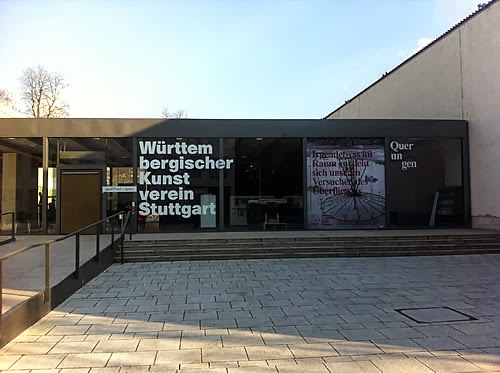
Trying to find the space and time for more mini-trips - that's what I started in January and February, and each time, I was glad for it. So when I went to Stuttgart city last week for a meet-up, I went an hour earlier and visited the independent museum near Schlossplatz, the "Kunstverein".


They currently show an exhibition on “Raum” – “Space”, it’s called “Something in Space Escapes Our Attempts at Surveying“. Might be rather modern and interesting, I thought when I read about it. And it is. Here's the installation you arrive at when you enter: emotional territories of "me" and "you".

Ricardo Basbaum: "Wall Diagrams"
Standing in front of them reminded me of my last visit to this museum, and the "mind maps" they featured back then... can't remember the name of the artist or of the exhbition, though. But I think i blogged about it, too... yes! here: "mind maps, life archives", and the mind map was from exhibiton was from Anna Oppermann, part of the exhibition "on/notes - A Research" and "On Dithering: Motives"...

But back to the current exhibition:
It's a thought-provoking exhibition of artists from different countries, each piece adding a different view or angle on the theme of space: from road trips to gender zones to “the axes of evil”. Here's a part of the introduction, the full text is online at the museum website:


One of the central works was Juan Downey's video installation "Video Trans Americas". a review notes: "Viewers of Juan Downey's "Video Trans Americas" tapes are confronted with the difference between documentary as art or as anthropology.. The tapes document various rituals and moments in the life of the Yanomami Indians of Venezuela's Amazonian rain forest. It's not simply documentation, though: Downey, a Chilean who studied art in Paris and Madrid and now lives in New York City, went to Venezuela to live with the Yanomami  ... and to develop an electronic form of communication with them." (here's the full text: Juan Downey.)

Juan Downey: "Video Trans Americas"
All this also connects to the current Coursera art course  "Live! A History of Art for Artists..:" - the second week had the theme “story”, started with cave paintings in France, and with the larger angle of how humans tell their stories through words and art. And with the question: whose stories remain, and who doesn’t have the means to tell their stories? Whose history remains? 

An art installation that especially moved me was this one:  the material table of Peggy Buth's "Superparadise". the theme of it: the way our culture deals with "others", in this case, with homosexuality. it's a combination of a list of de-humanizing swear words on one side, police reports in the middle, and a collage of photos: they are marking the space a society is willing to give, or is not willing to give to those who are different. 


and another kind of space: a photo documentation of abandoned spaces in Taiwan:


i could go on and on... but i think those pictures and notes give an idea. in an attempt to capture the feeling of being in this art space, and to catch the dialogue between the different artworks in this space, i tried a 360° video:


and so nice that one of the art installations invited a selfie: this is Bill Spinhoven's interactive video installation "It's about time" - what you see on a screen is a transformed version of reality, and of you - a different space.


Previous museum trips 2014:

Sunday, March 2, 2014

exploring this place 180 million years ago: layers of time, stone flowers, and a fragile bridge

"I want to go and explore that place one day" - that's what I thought every time I drove past the sign "Urzeit-Museum" ("Prehistoric Museum"). Now, finally, I went. Didn't really know what to expect. And found stone flowers that were millions of years old, and learned in a deeper sense that once upon a time, this region here was an ocean. Still moved by the visit. Here are some photos and notes:


The nature museum is set in the South of Germany, near the Swabian hill plateau, and reaches back about 180 million years in time. Back then, this region was an ocean, and some of the animals and plants from that time remained as fossils - some tiny, some huge, like the fish above.

And here's a showroom that gives an idea of how the museum started:


The museum was founded by a family who owned a quarry. Their quarry was specializing in slate, and working there, they kept finding fossils. At some point, they started to collect and prepare them, and founded a museum. It’s in the third generation now, and it is amazing, especially the unbelievable dimension of time and space, and the techniques they developed to bring back fragile elements of the fossils.

One of the most surprising fossils is a group of sea lilie. I blogged about it in the photo blog a day after visiting the musuem:

*

180 million years ago


"Once upon a time, some sea lilies floated through an ocean…. and turned to a fossile. found not far from here. Even standing right in front of it, it’s not possible to grasp the dimensions of time, that their fragile imprints date back 180 million years" 


*

The photo above just shows a small part of the full fossil. Here's the full view of the room - the sea lily fossil is about 18 metres long, and took about 18 years of restaurative work:


In a poetic coincidence, I came across lines about those stone memories from the past just some days later, in the collection of Buddhist poems called "What Book?!" that i am revisiting:

*

Anita Barrows

How many million years before wood turns to stone?
How many more million for stone
to be ground to sand? We know more

about their deaths than about their lives,
the great forests that covered the earth
before there was a single word

to name them, generations of silence
of which we can touch
only the last, the fragile bridge

back to what once was everything

*

I guess the impossibility to imagine the size of this fragile bridge sparked the wish to take a piece of this past back home. The Urzeit museum actually has pieces of fossil on sale, and the smaller ones have the price of an ice-cream: 3 Euro. I picked one of them, even though it feels a bit weird that they sell ancient things that way, but they have heaps of the small ones. Here's the one i picked:

Ammonite, 180 million years old

The fossils in the piece, they are the most common to be found in the slate: ammonites. Actuall, the slate has layers, and you can see different layers of ammonites. And the one who prepared it colored 3 of them, to make them stand out. The longer you look, the more you see.

And a final "explore" image: this is just across the street from the mseum: a small quarry, which is open to everyone. It just takes a small fee and a hammer, and then you can go and explor the layers of the past:


*

While putting these notes and photos together, I realized it would also fit for the new photo friday challenge “Explore”, just joined and added it to the list.  


*

More museum trips and other visits to nearby places: