Translation
By definition, translation is "the process of turning an original or "source" text into a text in another language"
Interesting word history: "The word translation derives from the Latin translatio (which itself comes from trans- and fero, the supine form of which is latum, together meaning "to carry across" or "to bring across")."
In German, "translation" is called "übersetzen" - which still has the second meaning of carrying across, for example: the passage of a ferry from one side to the other side of a river is also called "übersetzen".
Trails & Photos
The image above is a translation, too: the original photo is in color, and has a different format: it's a landscape photo. It's from France - which is called "Frankreich" in German.
Seen from a camera angle, every photo is a translation, too: a snapshot of reality as it presented itself at a certain time and place, seen from our angle.
A way of looking at things
And a beautiful link: Nobel laureate Herta Müller who grew up in Romania, yet learned German as mother language there, reflected on the art of translation in a speech, which itself got translated in over 10 languages. Here's a quote:
"The art of translation is looking at words in order to see how those words see the world... Each sentence is a way of looking at things, crafted by its speakers in a very particular way. Each language sees the world differently, inventing its entire vocabulary from its own perspective and weaving it into the web of its grammar in its own way. Each language has different eyes sitting inside its words."
"If I would have to sort the books i am reading these days into categories, one category would be: "Memoirs of long trails"... that's what i wrote in a previous book post, after reading "Wild", Cheryl Strayed's memoir of walking the Pacific Crest Trail (reading note), and Murakami's book on running as welle as Schaefer's book on walking from Berlin into the mountains of the Alps (reading note).
The Old Ways – A Journey On Foot
I don't remember how i arrived at "The Old Ways" by Robert MacFarlane, but the subtitle instantly caught my attention: "A Journey on Foot". Actually, it's a book on multiple journeys, or rather: a wonderful, reflective book about walking, about the way mankind always walked and created pathes, and how following those pathes is leading you to new places, both geographically, but also in the mind. Here's more about it, from a review in the Guardian:
Each chapter of The Old Ways is composed of many short passages built up like little cairns, or strewn like shards of china clay. In memory they keep forming new alignments. The making of new maps – both of narrative and of land – is one of Macfarlane's enduring fascinations. ... In The Old Ways he studies Britain geologically, exploring the relation between peat and gneiss, chalk and sand, asking how we can learn to understand the country differently. (more: Guardian review)
The book itself starts at winter solstice, with a walk into the night, and that's when i started reading it, too: in December. It's one of the books i don't want to end, so i will read it slowly, maybe it can accompany me into spring.
Be There Now
Parallel to "The Old Ways", i am reading a collection of travel stories that leads around the world. "Be There Now" features stories from twenty-two contributors who share adventures and escapades from all continents, and covers a lot of different themes.
The book starts in Guatemala, and from there, moves to France, Mexico, China, Syria, Disneyland, Germany, Nicaragua, Alaska, Peru, Newfoundland, Costa Rica.. and it is as fascinating and diverse in destinations as it is in moods and themes. It ranges from fun stories to reflective, and from nature walks to online travel adventures. Here's the book page: Be There Now, it's available as paperback ($12) or as e-book for very travel-friendly 99 cents.
*
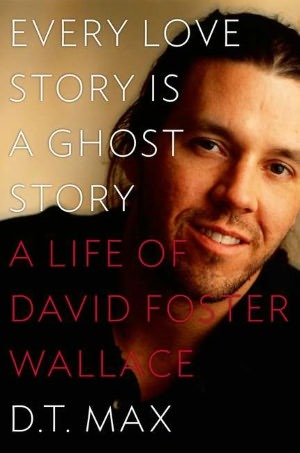
Currently Reading + More Reads: From outer journeys to inner journeys: i started to read the David Foster Wallace biography:"Every Love Story Is a Ghost Story". I picked it up after reading his essay/commencement speech "This is Water" at the first of January, and it's moving to see how sensitive and intelligent he was, and how at the same time he struggled for years to find his way in life.
during April, i am joining the A-Z Blogging Challenge - each day, i will revisit the archive of published works from a new alphabetical angle, and repost an image and a text. more about the plan: A-to-Z Blogging Challenge, April 2013
Today is: C. which took me back to a "Crow Woman" moment from abroad, and to a multilingual poem titled "Con Text".
****
con
text
un cafe con
leche she whispered as she took the step to the next chapter
un
croissant con jambon she scribbled on the exercise page to learn, to
erase
knowing all the time that one french day, she would have the
chance to say those words
yet would probably stick to
english even as a german in paris
***
C-Notes
Crow Woman was a title image of the online journal "Melusine, or Woman in the 21st Century" - here's the Melusine issue link with the image included. The photo, I took it in Bratislava, the capital of Slovakia - which i visited as one-day side trip of Vienna. While exploring the city with a friend, we arrived at this fascinating statue. For more about the trip, visit the travelogue with photos: Vienna, Bratislava, Vienna
Following the travel mood, I arrived at Con Text again - a poem written while i was trying to brush up my French again. Con Text was first published in the online magazine Big Pond Rumours, which sadly isn't online anymore.
**
A to Z Links
C-Blogging in other blogs, some recommended links: Carritwitchet (+ more word explorations from a fellow AtoZ-Dorothy :), Buffalo Bird Woman (Literary Grannies Series), Coffee in Bordeaux (artist page)
"História, História: Two Years in the Cape Verde Islands" by Eleanor Stanford
This is one of the books that I saw first in Goodreads, after Jason Pattus, editor of CCLP posted about the upcoming launch of this new book, set on the Cape Verde islands.
"Cape Verde - that's an interesting and unusual location. i remember reading about the islands once in a travel brochure. The book will only be available in print first, or?" - i wrote.
Pay-what-you-like-e-book
I received 2 replies: "Once released, you can usually download here for free: cclapcenter/historia - Frances & "That's right -- the book will be available in its usual free ebook form starting March 11th, when it officially gets released." - Jason (here's the Goodreads page + conversation)
Now i read "Historia". It's a fascinating and honest read - honest to the point of painful. At the same time, it's a poetic book, with tales of Cape Verde woven into the narrative, together with the characteristics of the islands: the wind, the seasons, the rhythm of life there. I definitely would recommend it, especially if you are interested in life in other cultures, and also in language.
Canary Islands & Cape Verde Islands
It also made me think of my own trips to the Canary Islands - the "sister islands" of Cape Verde. Both island groups are situated in front of the West African coast. The Canaries still belong to Spain, though, while Cape Verde belonged to Portugal and now is independent. And the Canaries are more touristic, due to the climate and the shorter distance to Europe (they are one of the main island / beach destinations in winter). Reading about the Cape Verde islands, for me it gave an idea how the Canaries might have looked before the rise of tourism. While reading "Historia", i revisited my own travel notes from the Canary Island- for more click Lanzarote, and here's a quote from one of them a travel story called "La Isla", which includes a question i thought about while reading "Historia":
"Walking back, she followed her own trails for a while, and couldn’t help but wonder how it would have been to grow up here, on this island, surrounded by water." (from: "La Isla")
But back to Cape Verde - here's the introduction to it: "Eleanor Stanford and her husband join the Peace Corps and find themselves on the West African islands of Cape Verde. In this beautifully alien place, as she teaches her students and struggles to come to terms with the island's fascinating yet frustrating culture .... Part travelogue, part cultural documentary, Historia, Historia combines journalistic excellence with the gripping style of personal memoirs to bring you this lyrical, moving portrait of an enchanting, little-glimpsed geography. "
History / Story / História / Geschichte
Here's one of my favourite passages of the book - starting with a tale and leading to island history. And also, including some reflections on language structure and synonyms. It's same in German, by the way: History and Story both translate to the same word: "Geschichte".
"This
is how the stories begin: "História, história,” a mother calls, drawing
the children into the lasso of lamplight. Once upon a time, there was a wily
creature named Nho Lobu – Mr.Wolf. .... Nho Lobu is the classic trickser of fairy
tales – except that he gets tricked in the end. He’s the lovable rogue, the
laughable picaresque, the prototypical Cape Verdean koitadu-poor thing. It is the
same word in Creole – as in Portuguese and other romance languages – for story
and history. ... Since independence, there
is more emphasis on the history of Cape Verde itself, but still, there are few
books written on the subject. When Portugal donates texts, they mention Cape
Verde in passing if at all. It’s a small stone in the shoe of the great empire.
History is something that happens elsewhere."
Audio Book: The Perfect Order of Things
I also started to listen to a (German) audio book, "The Perfect Order of Things", which sounded interesting from the brief description. But for the first time, I had problems with the reading voice - not sure why, but it felt like the "wrong" voice to read the story. So I gave up on the audio book.
**
Upcoming next: Futureworld & New Zealand
The next 2 books that are waiting here are for reading challenges:
"Little Brother" by Cory Doctorow
"Little Brother" by Cory Doctorow is a modern scifi story, it's one of the reads that is included in the Literary Course "Science Fiction and Fantasy: The Human Mind, our Modern World", which started with Grimm's Tales and Frankenstein, and now is arriving at contemporary fiction. (here the Tales post, and here's more literary courses online now).
I started reading into it, it takes a bit to get into it, especially after the island read, but it's brimming with insider views to the web, surveyance, hackers, coding... The title is a reference to Orwell and his "1984" - "Big Brother is Watching you".
PS. if you are interested in this book, it's actually available as free download from the author, who has an own webpage for it: Little Brother
*
Some Other Country
"Some other country" is a story collection with stories from New Zealand. I'm reading it for the "Around the World in 12 Books" challenges, which moves to the South Pacific Islands for April
***** Global Reading Challenge This blog post is inspired by a Global Reading Challenge, more about it here: 7 Continents, 7 Billion People, 7 Books - Reading Challenge 2013 The link is also listed in the "It's Monday! What are you reading?" series that is hosted by Sheila at Book Journey, participating blogs are listed in this Linky Book List Previous reading blog entries are collected here: bookshelf: currently reading... there also is a visual bookshelf, just click it to get there:
after reading about the Pyrenees last week, and looking for an own photo from a road trip through them in my own photo files, now more memories returned. all the photos are from the same day:
the marks on the road are from the Tour de France - which now makes me remember the mountain we visited: the "Tourmalet", a classic Tour de France mountain. half of it belongs to France, the other half belongs to Spain.
Back from a short trip to the Ruhr Region ("Ruhrgebiet"). Traditionally this was an area of coal mining and heavy industry. But in the last decades, more and more coal mines had to close and the whole region is now goes through a huge transition from old industry to modern industry.
The reason i went was "industry"-related: there's a huge comic + boardgame fair, and as i freelance for a comic company, i was there for live blogging and talks and generally helping with everything (including hosting the comic artists).
altogether, this now turned into a multi-themed trip with summer weather in October. here's an image stream:
view of the Ruhr Region from the "Gasometer",
an old gas tank that now is a museum
"Zeche Zollverein": once a massive coal mine,
now an Unesco world heritage
(more photos from this place, here)
of course, not all is industry here:
church courtyard in the city centre
...and now, to the comic fair:
comic artist at work -
... and more art, now back in the Gasometer:
photo exhibition "Magisch Orte" / "Magic Places"
(which opened April 2011 and closes today, so i was just in time to see it)
"The region i live in: i think i only now start to realize the vivid history it has in so many ways. it's good to explore. of course, during school time and later, there always were notes and pointers at that, but i think i didn't grasp the scale: it more was like looking at dusty and mute old stones. now the stones start to talk."
that's what i noted a month ago, after i spent a day following Roman roads, which brought me to the remains of an old village, found under the new city of Rottenburg:
all those layers of places, and the things that have been there where we are now, and sometimes find their way to daylight again. like the Venus figure from neolithic times, the oldest of the world - visited on an earlier trip this year. no photos allowed there, so here as substitute, some other figurines the museum hosts, from other places of this world:
following the theme of past timelines, i went to Stuttgart city yesterday. the old city castle hosts the "Landesmuseum" there - a regional historic museum. they were closed for 3 years due to major renovations and reorganization of the exhbition. this month, they reopened with an exhibition that follows the timelines of the past from neolithic times to Celtic times, and on to Roman times, the middle ages and the now. walking through the 8 large rooms is like walking through 8 stages of times. so interesting.
no pictures allowed inside, but there's an extensive photo collage via google: Landesmuseum, and below is a photo collection from the trip with some brochures included that give an idea, leading from the "Schlossplatz" ("castle square") with its fountaines to the Landesmuseum, and on to a city window reflection that combines the old and the new.
***
and as all those home road trips start to connect more and more, here the links to the previous regional road trips, the tag is: homejourneys
the new photo Friday theme is “Of house and home” – it made me think of the places that were home for a short while during a trip. usually when travelling, i rather try to stay in holiday apartments, as they have more of a home feeling abroad.
some photos from such temporary “homes”, all with good memories are included below: the city apartment that was home for me and 2 friends in Berlin, a beach apartment that was home during a stay in Crete, and a small holiday house that was home in the South of France. and the photo on top: that is the view from the upper floor window of the French house, which also brought back the basic idea of houses: to have a shelter, a roof above one’s head in the night.
the theme also brought me back to the day i visited the Le Corbusier house near here - it's part of a Bauhaus-area that was created in 1927 to showcase new idea of concepts of living, and even beyond that: a place that carried by an idea of a better world architecture that went far beyond the houses.
here's more on the theme, in a post that starts with the architecture of Tel Aviv, and includes a letter from a friend who lives there, and who shares the current situation of increasingly unaffordable living space: shores, migration, modern times + a better world
last year i started a photo blog to participate in the 100 day challenge. "a photo a day for 100 days" was the plan. it also set the title of the blog: "participation"
after the challenge, the blog went to hibernation. and got revived in January by the "January Stones Challenge: to note one moment each day". afterwards, again the blog went to hibernation, but the spark of it glowed on - and brought me back to it in March.
since then, i post a photo a day - with each photo leading to the next in theme, but in changing places. which turned into quite a photo journey so far. and also made me connect to another kind of participation: based on the photo tags of all blogs, wordpress creates automatic blog post streams for each tag.
those streams also brought some interaction across blog borders, some running into other bilingual bloggers, and some food for photo thought, like this one: "A simple question; are your photographs interesting, or photographs of interesting things?"
today: a trip to the bluest pond of Germany. which is called, following the blue logic: "Blautopf" - "Bluepot". it's a place that doesn't like to be photographed. it's not a large lake, either. but a deep one, with legends attached to it. the lake, it has an open ground, with a spring at its bottom that leads into a cave system. that's why the water is so blue: "The water's blue color is the result of chemical properties of limestone densely distributed in the water."
there’s a walkway around it, and the light and blue shifts with the angle you look at it. it’s a small place of many views. if you walked around it in a medium pace, it might take you 5 minutes. but this place isn't made for medium. it invites to slow down, to sit on a bench, to watch the surface that looks so still, while all the time, water is pouring from it, and flowing into the stream called "Blau".
if you follow that stream, you are lead to a labyrinth of sub-streams that run past houses. there's a wooden bridge here, an old mill there - the oldest building of the town, and maybe the starting place of what later became this town. there are walkways, tiny bridges, doors that open to water. and there's the place where the streams come together again: a pair of swans nests there, in between all.
the pictures are missing something, of course: the sound of water, the flow of it. here's a water video:
The Neolithic Venus of Blaubeuren
all that is only half of the story - it was here, in this valley, that some tiny remains of another time were found: flutes, 2 lion men, and just recently: a venus figure. made of the ivory of mammoths. which gives an idea of how old those memories of a time gone are: about 35.000 to 40.000 years. i still have to wrap my head around this. just last week, i was in a place that reached back to Celtic times, and i felt: that was a long time to imagine already: 2200 years ago, near here.
and compared to that, the Venus is 20 times older. how to capture that? but so interesting, this reaching into the past. and it most probably was the very same water source that brought those very early settlements there. the same blue. only that back then, it was mammoths instead of swans (well.)
the discovery is a recent one, though: it was about 4 years ago that archeologists found the venus figurine the, the "Venus of Hohle Fels". the town is still reshaping its museum, here's a photo from the current exhbition, with a collection of other female figurines from long past:
At the exhibition, they also showcased some books that related to the theme, one is written by a historian and a literary professor, both from the university in Tübingen, it's titled: "Die Venus aus dem Eis - Wie vor 40.000 Jahren unsere Kultur entstand" - "The Venus from the Ice - How 40.000 year ago, our culture developed", which has the venus on its cover
The known and the unknown
The university takes care of the scientific studies that relate to the area of Blaubeuren, the original venus is in their labs. And it seems, the scientists there arrived at the same question: how to capture this time, and how to deal with the mix of facts and theories?
There are so many facts that were found and explored in the last years there, but also so much unknown about that time, they tried to make the knowledge accesible in a science-novel: based on what they know, but adding a narrative and also additional parts with scientific notes. I knew i just had to read the book. And it’s well written, and very interesting and illustrative, with the narrative and with additional chapters that include explanations, notes and diagrams, like this one that sums up the keys to life on earth in the last 250.000 years: